 English
 简体中文
A logistics supervisor in a distribution center covering 12,000 square meters lowers a 1.5 t pallet, then rotates the forklift through a 180-degree turn in an aisle that measures just 2.8 m between rack frames. That maneuver takes about four seconds with a 3 wheel electric forklift, and it is the reason many fleet operators specify this truck class for dense indoor storage.
The short answer is this: a 3 wheel electric forklift offers the tightest turning radius in the counterbalance category, which translates into narrower rack aisles, faster load cycles, and less product damage. The trade-offs appear in lateral stability and usable capacity at full lift height, so the right choice depends on how accurately you match the truck specification to your real operating conditions.
Why a 3 Wheel Configuration Delivers a Smaller Turning Radius
The three-wheel layout uses two front drive wheels and one centrally positioned rear steering wheel. Because the steer wheel sits directly under the rear end of the chassis, the rear of the truck swings through a much smaller arc than the two rear wheels on a 4-wheel forklift. This changes cornering behavior in rack aisles, trailer interiors, and staging areas.
Published turning radii for 1.5 t class 3 wheel models typically fall between 1,380 mm and 1,600 mm, compared with roughly 1,850 mm to 2,200 mm for equivalent 4-wheel counterbalance trucks. That 300-600 mm difference translates directly into aisle width savings of 500-800 mm in practice, because the operator does not need as much extra room for the rear end to swing out.
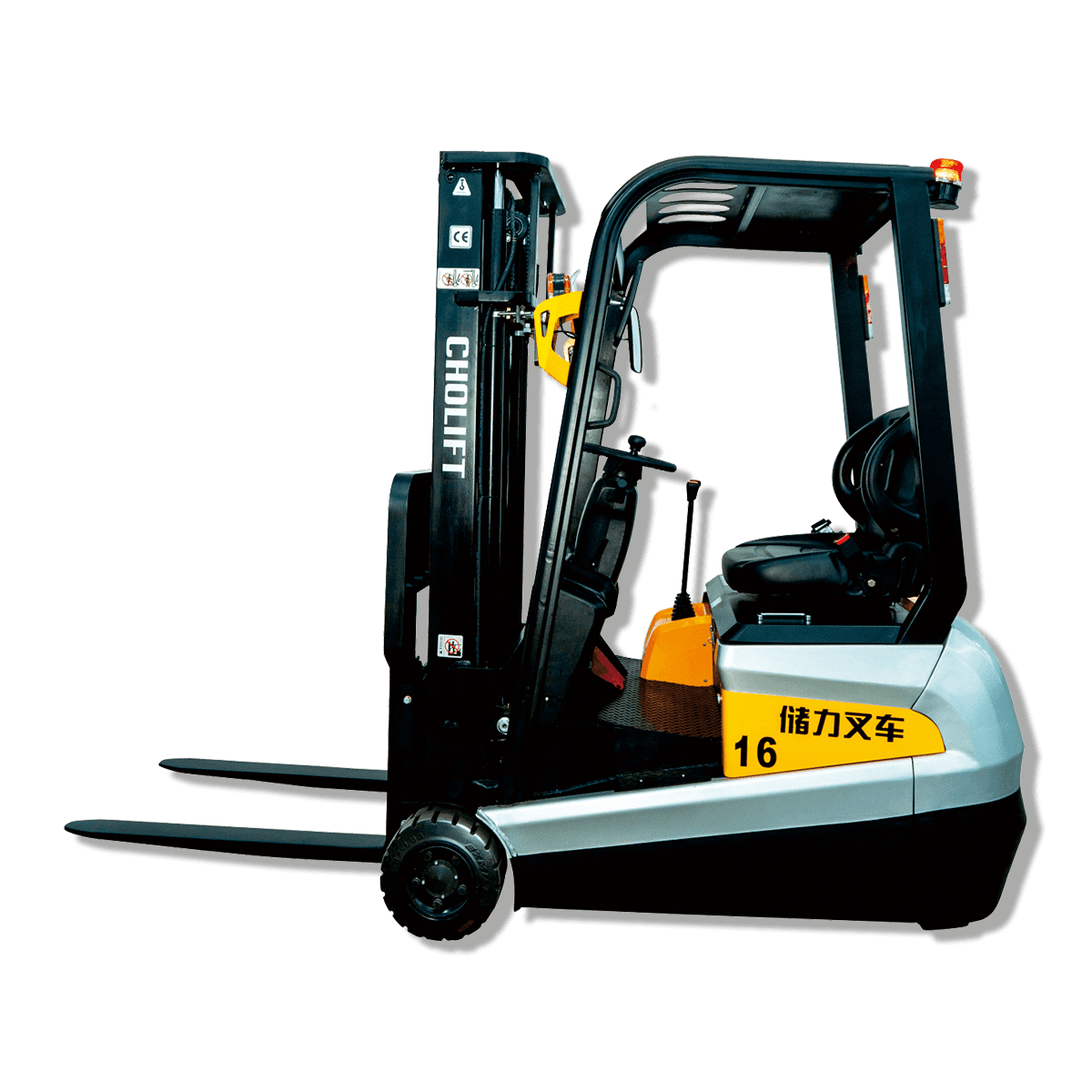
The design also reduces tire scrub. With only one rear tire, the contact patch is smaller and the tire rotates in place during sharp turns instead of dragging sideways. Facilities with polished or coated concrete floors notice less surface marking and less rubber deposit over time. A representative example of this class is the CHOLIFT three-point electric forklift, which combines a compact footprint with a counterbalanced mast layout suitable for standard pallet handling.
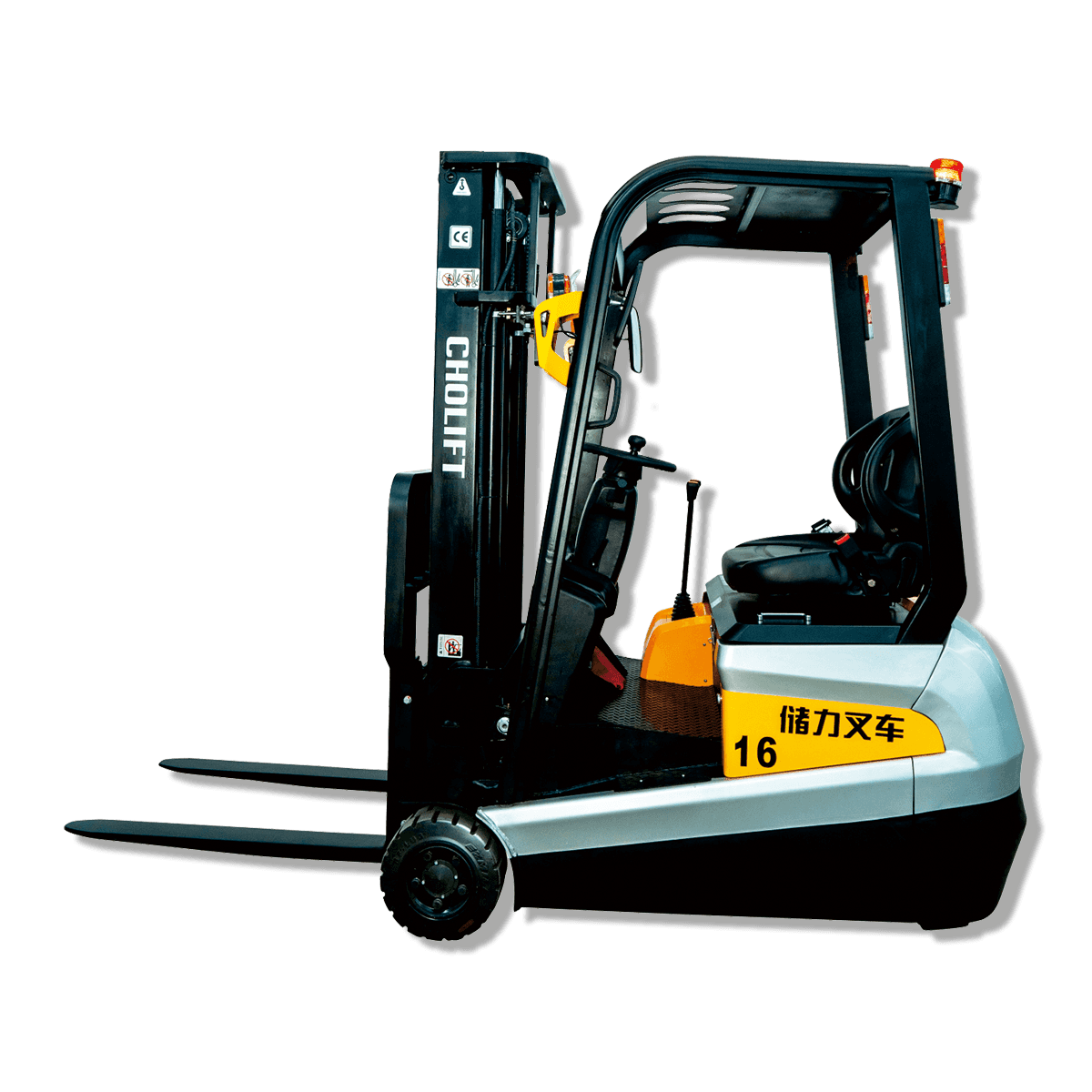 Custom Three-point electric forklift Suppliers, OEM/ODM Company - NINGBO CHOLIFNINGBO CHOLIFT FORKLIFT CO.LTD. is China custom Three-point electric forklift Suppliers and OEM/ODM Company, Standard with solid tyre, si...View Product →
Load Capacity and Stability: Working Within the Stability Triangle
All counterbalance forklifts rely on a stability triangle formed by the points where the wheels contact the floor. In a 3 wheel forklift, the two front wheels form the base of the triangle and the rear steer wheel forms the apex. When the mast is vertical and the load is at the rated center of 500 mm, the truck stays inside its stability envelope. When the mast tilts forward, reaches a higher lift height, or carries a load wider than the forks, the effective center of gravity moves toward the edges of that triangle.
3 wheel electric forklifts in the 1.0-2.5 t range are safe when operated within rated capacity, but they demand more disciplined load handling than a 4-wheel truck. At maximum lift height, lateral stability is lower because a single rear wheel provides the only support behind the drive axle. For operations that constantly stack 1.5 t loads above 4.5 m, a four-point electric forklift gives a wider wheelbase and higher tolerance for uneven loads.
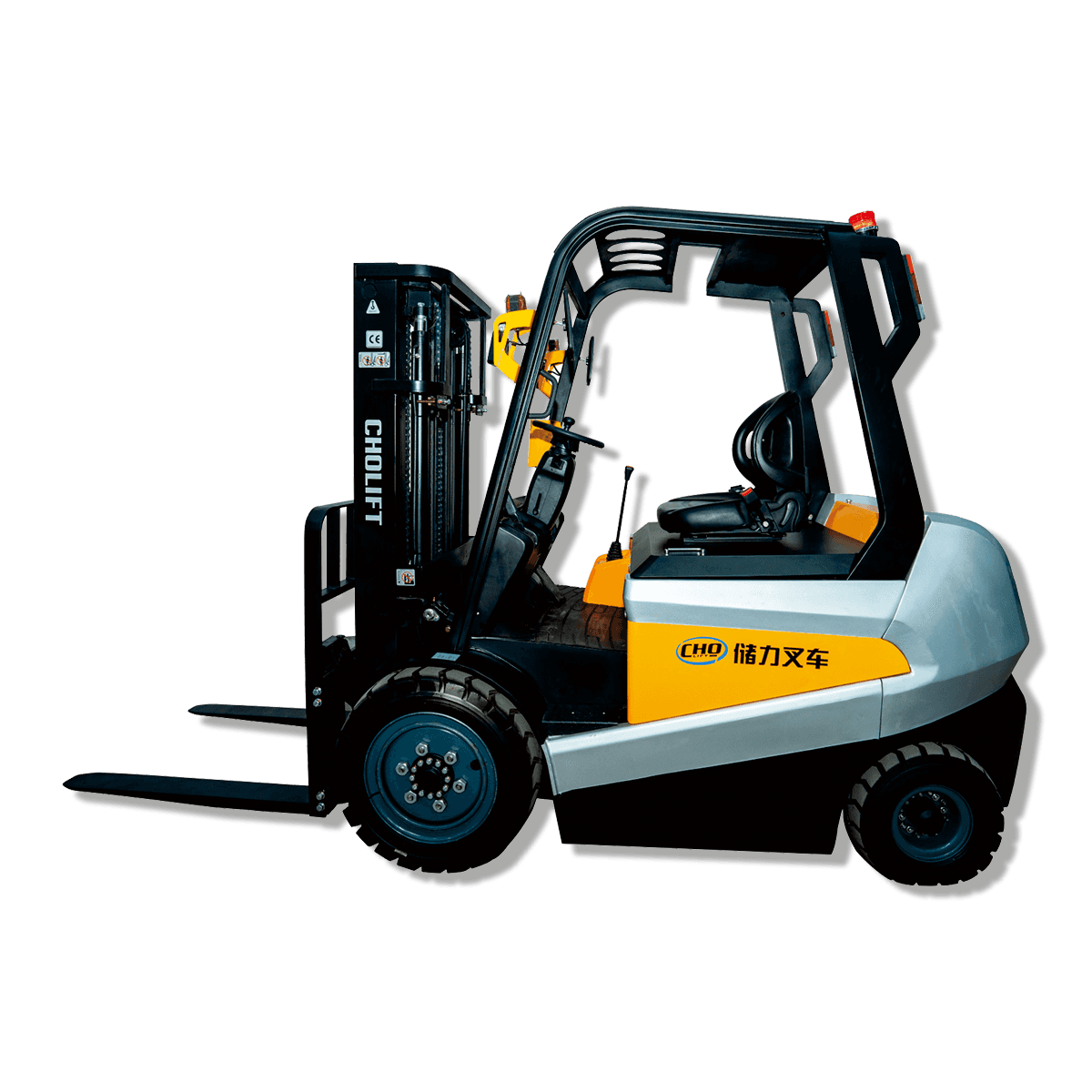 Custom Four-point electric forklift Suppliers, OEM/ODM Company - NINGBO CHOLIFTNINGBO CHOLIFT FORKLIFT CO.LTD. is China custom Four-point electric forklift Suppliers and OEM/ODM Company, AC DRIVE ADVANTAGES High effi...View Product →
The table below compares the published performance envelopes for typical electric counterbalance trucks in this class.
| Parameter | 3-Wheel Electric Forklift | 4-Wheel Electric Forklift |
|---|---|---|
| Load capacity | 1.0-2.5 t | 1.5-5.0 t |
| Turning radius | 1,380-1,650 mm | 1,850-2,400 mm |
| Rear wheel configuration | 1 center steer wheel | 2 steer wheels |
| Right-angle stacking aisle | 2,600-2,800 mm | 3,000-3,400 mm |
| Lateral stability at full lift height | Moderate | Higher |
| Floor friendliness | Higher due to less tire scrub | Moderate |
If your operation involves frequent full-height stacking, uneven loads, or outdoor ramp work, factor those conditions into your stability assessment. If the majority of work is flat indoor handling below the rated load, the 3 wheel format gives you a tangible space-saving advantage without compromising day-to-day productivity.
Battery and Powertrain Choices
Most 3 wheel electric forklifts are built around a 48 V electrical system, with the battery mounted low in the chassis to keep the center of gravity near the floor. This placement is a key reason electric counterbalance trucks feel stable during lifting. Battery selection affects runtime, charging routine, and the service life of the complete truck.
Standard lead-acid batteries for a 1.5 t model typically range from 360 Ah to 560 Ah and need a full charge cycle of 8-10 hours plus a cooling period before the next charge. Lithium-ion packs, where offered, support opportunity charging during breaks and usually reach full charge in 1-2 hours, which matters for multi-shift operations. Lithium also eliminates acid mist, watering chores, and the need for a dedicated battery changing room, at the cost of a higher initial purchase price.
Electric models produce no local exhaust emissions, so they can operate indoors without special ventilation. The environmental benefits of switching to electric forklifts go beyond emissions: energy costs per shift are typically 30-50% lower than equivalent diesel or LPG trucks, and the absence of engine maintenance reduces unplanned downtime.
Operating Costs and Total Cost of Ownership
When comparing a 3 wheel electric forklift with a 4-wheel model, the purchase price is generally 5-15% lower for the same load class, but the larger savings come from operations. Electric drivetrains have fewer wear parts than internal combustion engines, and a 3 wheel truck has one fewer tire to replace. On the other hand, the single rear steer tire tends to wear faster than each individual tire on a 4-wheel truck because steering forces concentrate on one contact patch. High-intensity operations with many sharp turns will need a rear tire replacement sooner, so include tire cost over the life of the truck in your comparison.
Charging infrastructure is another line item. A 48 V charger matched to the battery capacity costs a small fraction of the truck itself, but it must be installed with the correct power supply and, for lead-acid, with adequate ventilation. Lithium-powered trucks reduce those facility requirements and can often be charged at a standard power outlet.
From a maintenance perspective, electric motors need minimal service beyond bearing lubrication and electrical inspection. Most manufacturers recommend scheduled service every 1,000 operating hours and a comprehensive inspection at 3,000-5,000 hours. The battery remains the most significant long-term cost, so log charge records and keep discharge depth within the supplier's recommendations.
Best Applications for a 3 Wheel Electric Forklift
Three wheel electric forklifts are primarily indoor trucks. They perform best in distribution centers, e-commerce fulfillment warehouses, food and beverage storage, pharmaceutical depots, and light manufacturing plants where floors are smooth and aisle widths are constrained. Their tight turning radius makes them the natural choice for trailer unloading and for U-shaped rack layouts that require repeated 180-degree turns.
A typical right-angle stacking aisle for a 1.5 t 3 wheel model measures 2,600-2,800 mm, narrower than the 3,000-3,400 mm needed by an equivalent 4-wheel model. That difference can translate into additional rack rows or a smaller building footprint. For a deeper analysis in a related environment, see this discussion of electric forklift use in warehousing and distribution centers.
If your site includes outdoor ramps, gravel yards, or continuously wet floors, a 3 wheel electric forklift is not the ideal choice. In those cases, a four-wheel counterbalance truck or an internal combustion model with suitable tires provides better traction and stability.
How to Select the Right 3 Wheel Electric Forklift
Start from the load, not the brand. Calculate the maximum pallet weight, the highest lift height, and the distance from the fork face to the load center. A pallet with a 600 mm depth places the load center at 500 mm, which matches the standard rating. If your loads are longer or heavier, the actual capacity will be lower than the rated capacity, so ask the supplier for a capacity derating chart.
Second, measure the aisles, doorways, dock levellers, and any clearance gaps the truck must pass through. Turning radius gives you the theoretical minimum, but the real requirement is the right-angle stacking aisle width at your specific mast height and fork length. Third, define your shift pattern so you can choose between a lead-acid and a lithium battery.
Finally, request a demonstration in your own facility with your typical pallets. A full shift of operation reveals whether the 3 wheel configuration's agility truly improves your loading cycles, or whether the stability of a four-point electric forklift better serves your floor conditions and stacking routines. Confirm that the truck carries the required CE and GS certification and that production follows ISO-standard testing, which supports insurance, site audits, and equipment registration in many markets.
In summary, a 3 wheel electric forklift is the right tool when indoor maneuverability, aisle width reduction, and low operating costs matter more than maximum lateral stability. Confirm your load profile, measure your facility constraints, and compare total cost of ownership before you commit. For a complete view of what is available, the CHOLIFT electric forklift range covers both three-point and four-point configurations with certified quality and application-specific options.
 Wholesale Electric Forklifts Manufacturers, FactoryAs China electric forklifts manufacturers and electric forklifts factory, NINGBO CHOLIFT FORKLIFT CO.LTD offer wholesale electric forklif...View Product →