 English
 简体中文
When a warehouse manager walks behind a counterbalance forklift and sees the rear wheels angle left and right before every turn, the question almost asks itself: “Are all forklifts rear wheel drive?” The short answer is no. Most counterbalance forklifts are front-wheel drive, with rear-wheel steering. The rear wheels pivot to steer the truck, but they are not powered. Understanding this distinction matters because it affects traction, tire wear, turning behavior, and the type of forklift that actually suits your operation.
The Standard Counterbalance Layout Is Front-Wheel Drive
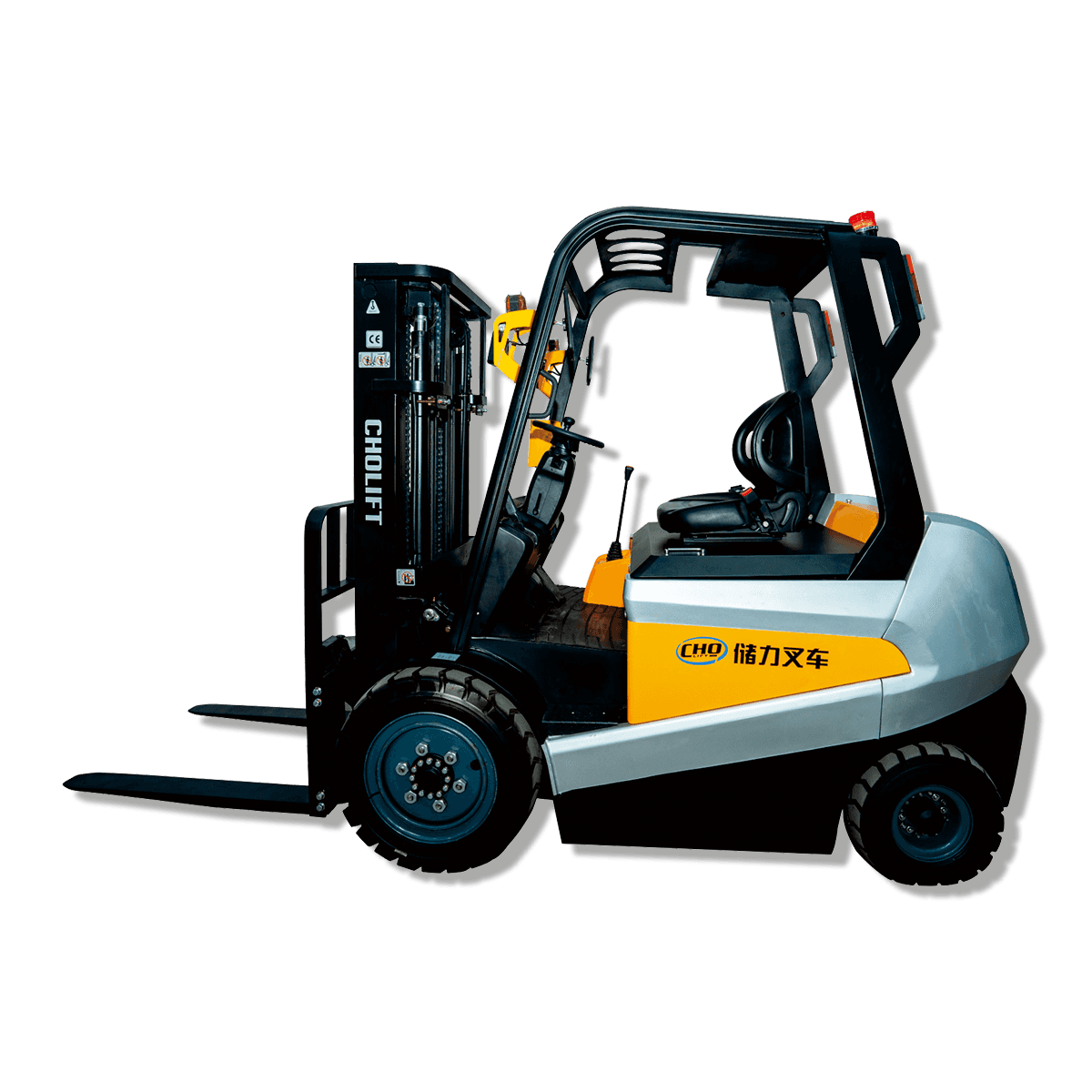
A counterbalance forklift is designed around a simple weight-transfer concept. The forks and mast sit at the front, and a heavy counterweight sits at the rear. When the truck lifts a pallet, the load pushes down on the front axle. That means the front wheels carry more weight than the rear wheels in almost every working condition. Since traction depends on the weight on the drive wheel, the logical solution is to put the drive axle at the front. The front wheels pull the chassis forward, while the rear wheels provide steering by pivoting from side to side.
This layout is why a loaded counterbalance forklift feels stable on smooth concrete: the driven front wheels have load directly above them, and the steering rear wheels follow a tighter arc than the front ones. It also keeps the steering system relatively light, because it is handling direction only, not torque. The result is predictable handling, even at full lifting capacity.
Why Rear-Wheel Steering Gets Mistaken for Rear-Wheel Drive
The confusion starts with the word “drive.” In a car, “rear wheel drive” means the engine sends power to the rear axle. In a forklift, the rear wheels are often the steering wheels. Because they visibly turn every time the truck changes direction, it is natural to assume they are also supplying power. However, steering and driving are separate functions. On a standard counterbalance forklift, the rear wheels are mounted on a steering axle with no motor or driveline connection. You can verify this on the specification sheet: the traction motor is listed at the front, and the steering motor, cylinder, or steering axle is at the rear.
When Rear-Wheel Drive Makes Sense
Front-wheel drive may dominate counterbalance trucks, but rear-wheel drive does appear in several other material handling categories. Understanding these exceptions will help you read a specification sheet more carefully.
Three-Wheel Electric Forklifts
Three-wheel forklifts combine a single wheel at one end and two wheels at the other. In some designs, the single rear wheel is a combined drive-and-steer unit. That configuration removes the need for a differential and lets the rear wheel rotate through a wide angle, producing a very small turning radius. In other designs, the two front wheels are the drive wheels and the rear wheel handles steering only. Both versions exist, so you cannot assume all three-wheel forklifts are front-wheel drive or rear-wheel drive.
Reach Trucks and Powered Pallet Trucks
Reach trucks and many powered pallet trucks use a different approach. They often have a single drive wheel under the operator compartment or at the rear of the chassis. That wheel is both powered and steerable, which is effectively a rear-wheel drive setup. It suits indoor narrow-aisle applications because a centrally located drive wheel can rotate the machine around a surprisingly tight pivot point.
Rough-Terrain Forklifts
For outdoor sites with mud, gravel, or uneven ground, manufacturers frequently specify all-wheel drive. Four driven wheels keep the truck moving when the rear wheels lose grip. Some compact rough-terrain units use rear-wheel drive as a lower-cost option, but serious off-road work usually relies on 4WD.
Drive Configurations at a Glance
The table below summarises the main drive configurations you will encounter and how they affect real-world behaviour.
| Drive Type | Power Applied To | Typical Models | Main Strength | Key Limitation |
|---|---|---|---|---|
| Front-wheel drive | Front axle | Counterbalance forklifts, some 3-wheel electrics | Best traction under load, stable steering | Larger turning circle |
| Rear-wheel drive | Rear axle or single rear drive/steer wheel | 3-wheel electrics, reach trucks, pallet trucks | Compact turning, simpler drivetrain | May lose traction when load is light |
| All-wheel drive | All wheels | Rough-terrain forklifts | Outstanding grip on mud and gravel | Higher cost, more maintenance |
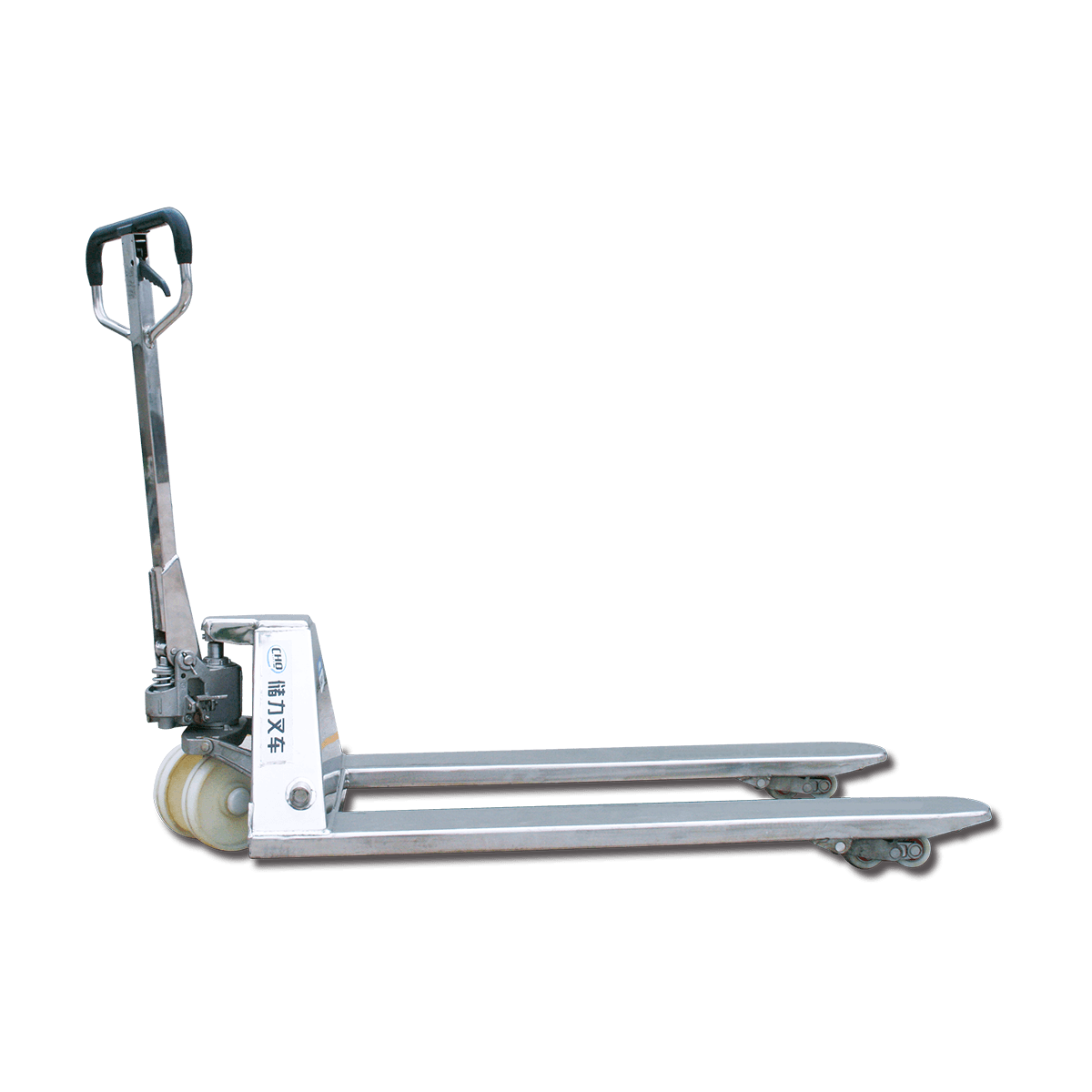
| No motor drive | None | Hand pallet trucks | Low cost, no battery or motor | Manual effort only |
How to Verify a Forklift's Drive Configuration
Before buying a machine, you can confirm which axle is driven in three simple ways:
- Read the specification sheet: look for the words “drive wheel” or “drive axle.” The location of the traction motor tells you exactly where the power is applied.
- Inspect the wheels: driven wheels are normally connected to a motor or an axle housing; steering wheels are smaller and sit on a vertical kingpin or a steering axle.
- Ask the manufacturer or dealer directly. A quick call will settle whether you are looking at a front-drive, rear-drive, or all-wheel-drive unit.
If you are weighing electric forklift options, it helps to know how power delivery affects daily performance. For more context, see our comparison of electric forklift limitations.
What This Means for Your Buying Decision
Drive configuration is not a cosmetic spec. It changes how the forklift behaves under load, how quickly tires wear, and whether the machine can handle your aisles and floors. Here is a practical way to think about it.
If you operate mostly on smooth concrete and move heavy palletized loads, a conventional front-wheel-drive counterbalance forklift is the safest, most predictable choice. The load-bearing front axle supplies traction, and rear-wheel steering keeps tail swing manageable. A four-point electric forklift is a typical example of this design and a strong candidate for daily loading and unloading work.
 Four-Point Electric Counterbalance Forklift for Smooth ConcreteThis conventional front-wheel-drive counterbalance model suits daily loading on smooth surfaces, offering predictable handling and stable traction for heavy palletized loads.View Product →
If you are short on aisle space and constantly work around racking, a three-wheel electric forklift may be a better fit. Many three-wheel models are designed for tight turns, whether they use front or rear drive. A compact three-point electric forklift can solve manoeuvrability problems without sacrificing lifting capacity.
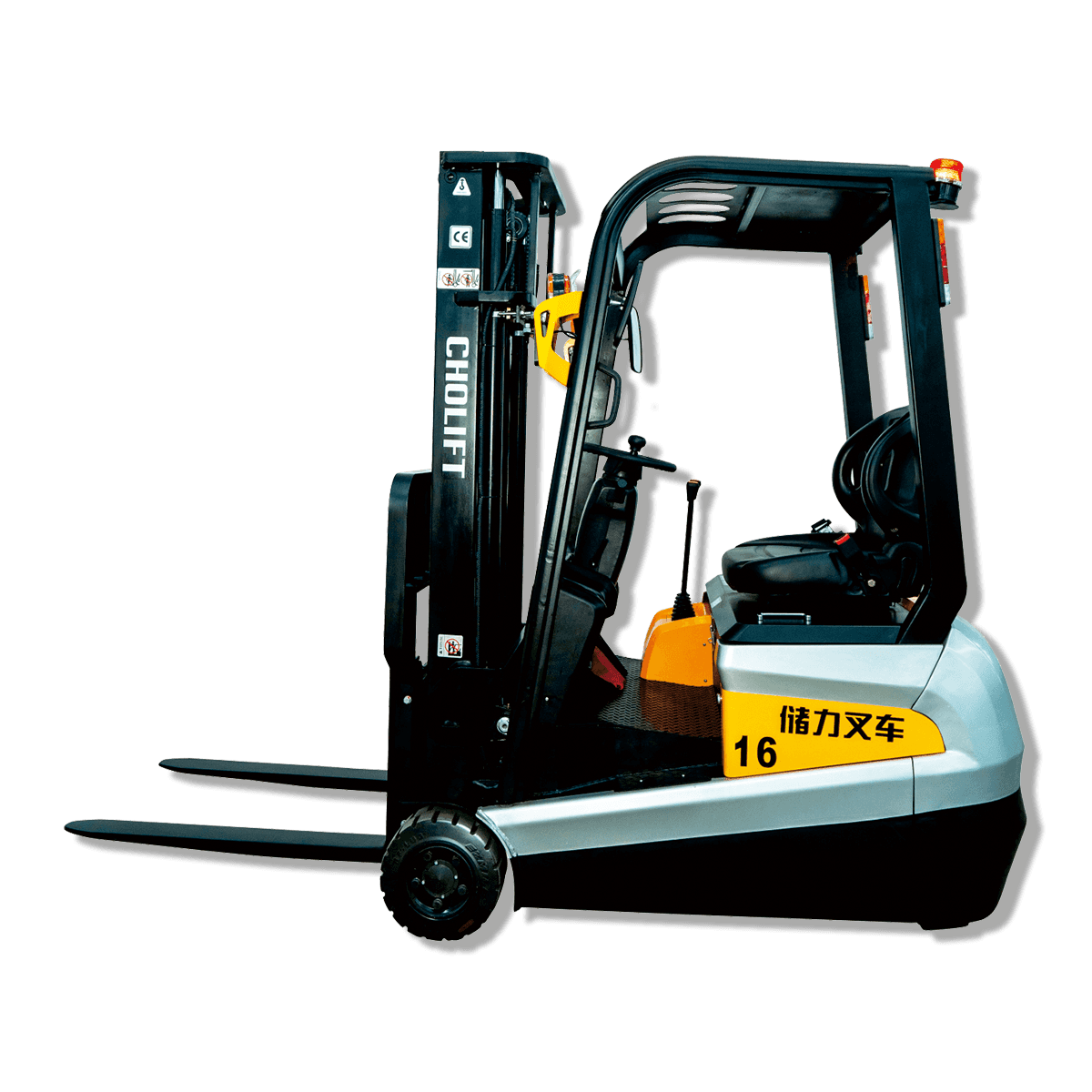 Compact Three-Point Electric Forklift for Tight AislesDesigned for manoeuvrability in narrow racking areas, this three-wheel electric forklift keeps lifting capacity while reducing turning radius, ideal for space-constrained operations.View Product →
If your operation is mostly horizontal transport, a powered pallet truck is often more cost-effective than a full forklift. In this category, the drive wheel usually sits at the rear near the operator, with steering integrated into the same wheel. An EPS-steering electric pallet truck reduces steering effort and improves control in tight spaces, which is exactly what you need for repeated crossing of busy warehouse corridors.
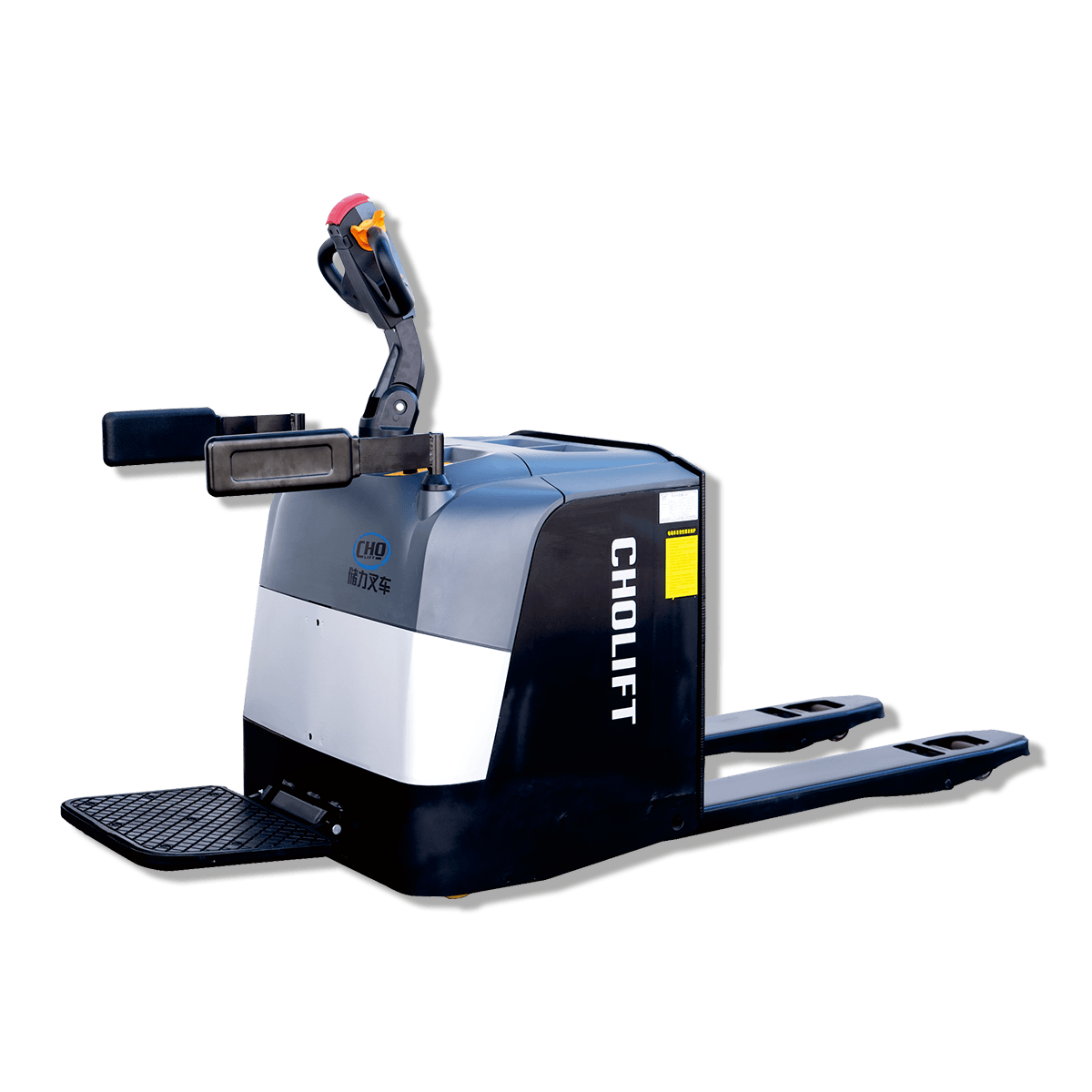 EPS-Steering Electric Pallet Truck for Horizontal TransportThis powered pallet truck with electric power steering eases operation during frequent warehouse corridor travel, improving control in tight spaces and reducing operator effort.View Product →
Conclusion: Don't Judge a Forklift by Its Rear Wheels
So, are all forklifts rear wheel drive? No. The dominant layout for counterbalance forklifts is front-wheel drive with rear-wheel steering. Rear-wheel drive appears in certain three-wheel models, reach trucks, and powered pallet trucks. All-wheel drive is reserved for rough-terrain machines and outdoor sites. The next time you see a forklift's rear wheels turning, remember that steering is not the same as driving. Check the spec sheet, confirm which axle is powered, and you will know exactly what the machine was built to do.