 English
 简体中文
Standing on the warehouse floor with a purchase order in hand, the choice between an electric and a propane forklift comes down to how your operation actually runs. For most indoor, single-shift operations, electric forklifts now deliver a lower total cost of ownership, cleaner air, and less maintenance. Propane still holds the advantage when refueling must happen in minutes, when outdoor terrain is the norm, and when the initial purchase price matters more than the five-year cost. The deciding factors are cost, runtime, emissions, and maintenance. Here is what each one means in practical operating terms.
Total Cost of Ownership: Upfront Price vs Five-Year Spend
Electric forklifts carry a higher sticker price, but over a typical five-year ownership period they usually cost less overall. A propane forklift is cheaper to buy because the engine and fuel system are well-established, low-cost components. An electric forklift adds an electric motor, controller, and battery pack, which can increase the invoice by several thousand dollars. The gap narrows quickly once operating costs are factored in.
Electricity is considerably cheaper per hour than propane, and an electric motor converts roughly 80 percent of stored energy into usable work. A propane engine is far less efficient: much of the fuel's energy is lost as heat through the radiator and exhaust, often leaving only 20 to 30 percent for actual traction and lifting. Propane units also burn fuel while idling, which adds cost across a shift. The battery type matters too. Lead-acid batteries are cheaper upfront but need regular watering and cool-down time; lithium-ion batteries cost more but last longer, charge faster, and require less daily attention. The table below summarizes typical ownership cost factors.
| Cost factor | Electric forklift | Propane forklift |
|---|---|---|
| Purchase price | Higher; battery adds to the upfront cost | Lower initial investment |
| Energy cost per hour | Low; depends on local electricity rates | Moderate to high; propane prices fluctuate |
| Maintenance cost | Minimal; no engine oil or spark plugs | Engine oil, filters, spark plugs, coolant |
| Major component replacement | Battery after roughly 1,500 to 2,000 cycles | Engine rebuild or replacement over time |
| Resale value | Strong, especially with a lithium battery | Weaker due to engine wear |
Runtime, Refueling, and Shift Patterns
Propane's clearest advantage is how fast you can put energy back into the machine. Swapping an empty tank takes about five minutes, while recharging a lead-acid electric battery can take eight hours. That is why propane trucks have long been the default for operations running two or three shifts without a break.
Lithium-ion batteries change that equation. A lithium pack can accept a fast charge during a lunch break or between shifts, and it does not require the cool-down periods or water refills that lead-acid batteries need. Single-shift operations can simply recharge overnight. Multi-shift operations can top up mid-day, which makes electric forklifts practical in schedules that previously demanded propane. CHOLIFT's 48V lithium electric pallet truck is built around exactly this charging strategy, with a battery pack designed to handle short top-up charges without damaging cell life.
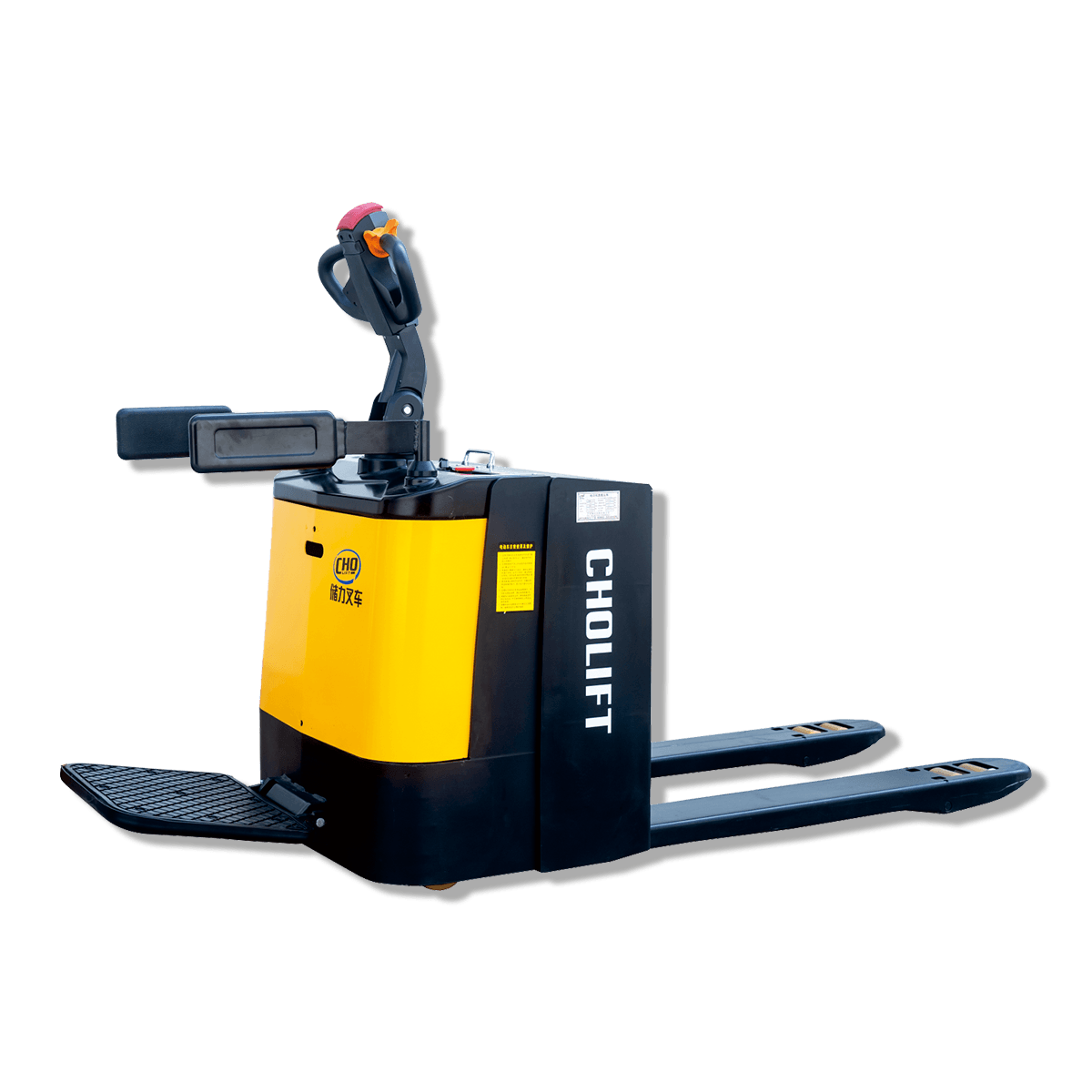 CHOLIFT 48V Lithium Electric Pallet Truck for Fast ChargingThis pallet truck supports short top-up charges between shifts, making electric operation practical for multi-shift schedules. Its lithium battery avoids cool-down delays and water refills, suiting enclosed warehouses.View Product →
Emissions, Noise, and Indoor Fit
Electric forklifts produce zero exhaust emissions on the warehouse floor, which is why they dominate food processing, pharmaceutical, cold storage, and clean manufacturing environments. Propane forklifts emit carbon monoxide and other combustion by-products, so they require ventilated indoor space. Ignoring this can lead to operator health problems and OSHA ventilation citations. Beyond workplace safety, the environmental benefits of electric forklifts extend to the overall carbon footprint, especially when the local grid draws on renewable sources.
Noise is another quality-of-work factor. Electric models generate little more than tire and hydraulic sounds, while a propane engine adds continuous engine noise to the environment. Operators who spend eight hours on a truck notice the difference in fatigue, and warehouses that rely on voice-picking or two-way radio communication find the quieter electric drivetrain easier to work around.
Cold storage is a particular case. Electric forklifts perform consistently in low temperatures because there is no engine to manage, and lithium batteries handle cold conditions well when specified correctly. Propane units work in cold storage too, but they require proper ventilation and can introduce moisture through exhaust.
Maintenance and Reliability
An electric forklift has roughly half the moving parts of a propane model. There is no engine oil to change, no air filter, no spark plugs, no radiator, and no exhaust system. The main service items are the hydraulic system, tires, and battery. Regenerative braking on many electric models also extends brake life by recapturing energy during slowdowns, which reduces both maintenance cost and downtime.
Propane forklifts require regular engine service, and internal combustion creates heat and vibration that accelerate wear. Carbon deposits build up on valves and spark plugs over time, and fuel systems occasionally need adjustment. Electric trucks are not maintenance-free, but the routine is shorter, cheaper, and easier to schedule around production shifts rather than emergency repairs.
When Each Power Source Makes Sense
Choose electric when
- The operation is mostly indoors and enclosed.
- The work is single-shift with an overnight charging window.
- Air quality, noise, or food safety requirements matter.
- Electric charging infrastructure is already available.
- Predictable, low maintenance is a priority.
Choose propane when
- The work happens in outdoor yards with rough terrain.
- Multi-shift schedules require five-minute refueling.
- No charging infrastructure exists and installation is costly.
- The site is remote, with a reliable propane supply.
In warehousing and distribution centers, electric power is increasingly the default because the environment is enclosed, shift patterns are usually manageable, and maintenance downtime directly reduces order throughput. For a warehouse replacing a propane counterbalance truck, a CHOLIFT four-point electric forklift provides similar lifting capacity with zero emissions and a lower operating cost per hour.
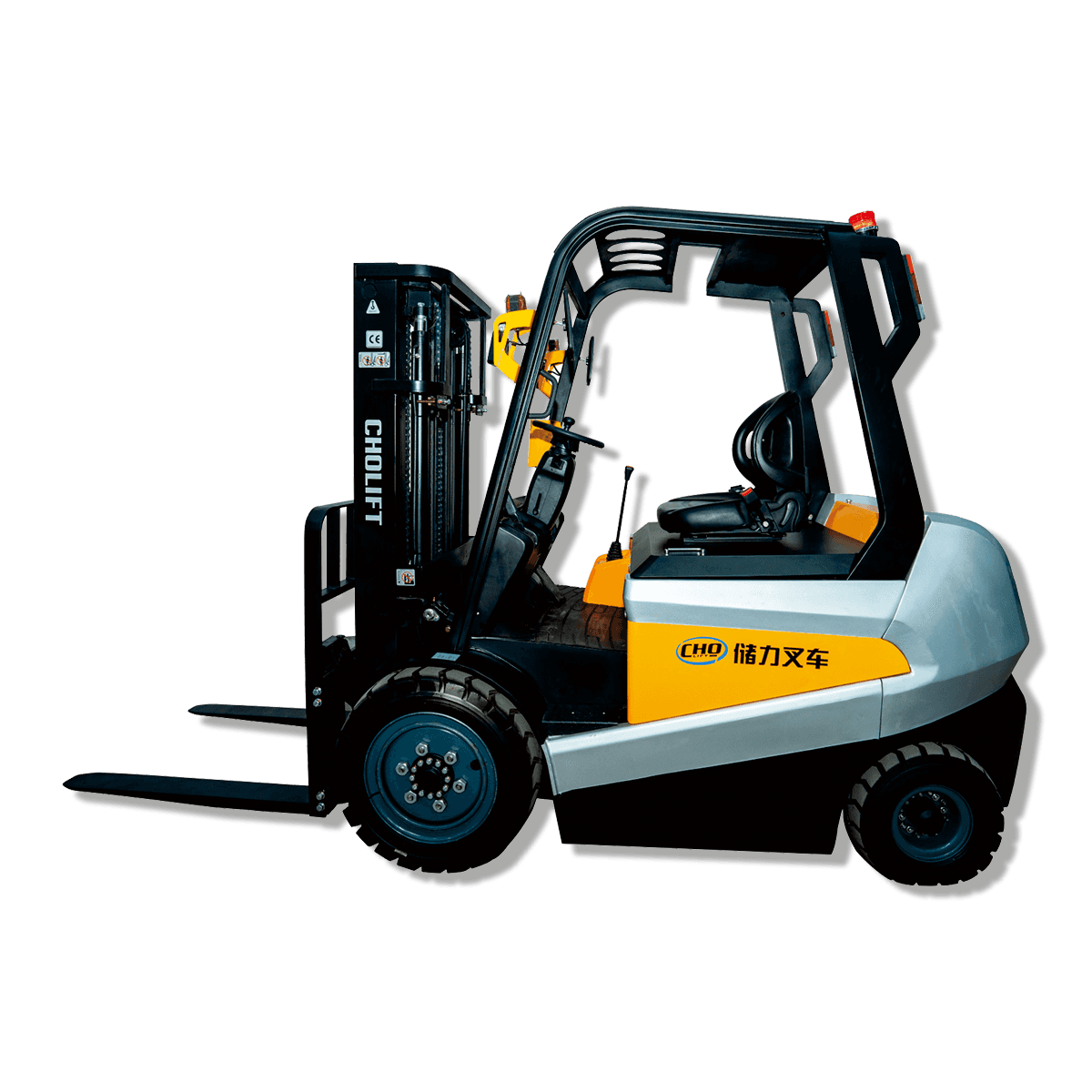 CHOLIFT Four-Point Electric Forklift for Warehouse ReplacementDesigned as a counterbalance replacement for propane units, this electric forklift offers similar capacity with zero emissions and lower hourly operating costs, fitting enclosed distribution environments.View Product →
A Decision Framework for Your Facility
The following table summarizes the factors that matter most when comparing electric and propane forklifts in a real operation.
| Criterion | Electric forklift | Propane forklift |
|---|---|---|
| Indoor air quality | Excellent, zero exhaust | Requires ventilation |
| Noise level | Low | Moderate |
| Upfront cost | Higher | Lower |
| Energy cost per hour | Lower | Higher |
| Refuel or recharge time | 20 minutes to 8 hours | About 5 minutes |
| Multi-shift readiness | Good with lithium batteries | Strong |
| Outdoor and rough terrain | Limited | Good |
| Maintenance burden | Low | Moderate |
| Cold storage suitability | Excellent | Acceptable with venting |
The clear pattern: electric leads on running costs, air quality, and maintenance; propane leads on upfront price and rapid refueling. Choose the technology that matches your dominant constraint.
Making the Switch with CHOLIFT
CHOLIFT manufactures a range of electric forklifts and material handling equipment for warehouse environments. If the decision is electric, the practical path starts with matching the truck class to the job. Counterbalance electric forklifts replace propane units seat-for-seat on capacity and lift height. Lithium pallet trucks handle floor-level transport with fast charging. For stacking tasks where a full-size forklift feels oversized, a counter-balance stacker from CHOLIFT offers a compact electric solution with a tight turning radius and clean operation.
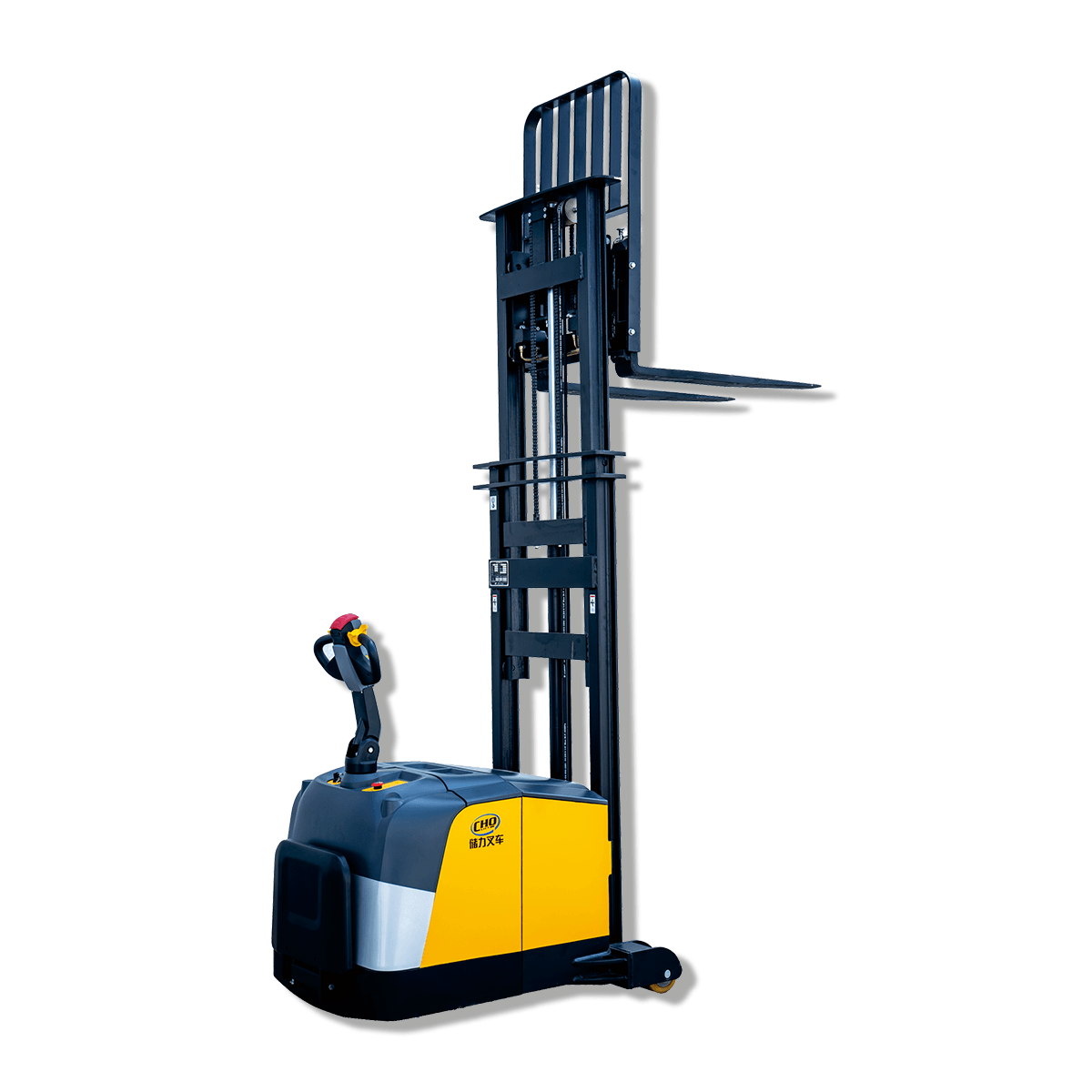 CHOLIFT Counter Balance Stacker for Compact Electric StackingThis compact electric stacker provides tight turning for stacking tasks where full-size forklifts are oversized, offering clean operation and a practical alternative for efficient warehouse material handling.View Product →
Whichever power source you choose, base the decision on measured data from your own operation: shift length, indoor or outdoor work, energy prices, and hourly labor costs. The right forklift is the one that keeps your throughput high and your total cost predictable.