 English
 简体中文
A 5,000 lb forklift rated at a 24-inch load center does not lift 5,000 lb when the load's center of gravity sits 36 inches from the fork face. The counterweight, mast, and front axle do not change; the leverage does. The fork truck load center calculation tells you the actual capacity left for that specific load. Ignore it, and the truck may tip forward even though the load weighs less than the number on the data plate.
What the Load Center Measures
Load center is the horizontal distance from the vertical face of the forks to the center of gravity of the load. On most counterbalanced forklifts, the nominal load center is 24 inches (600 mm). Some markets and truck classes use 500 mm or a dual rating. The data plate lists capacity at that nominal distance. When the actual load center moves forward, the truck's effective capacity drops.
The measurement is not the same as load width. A load can be narrow and still have a long load center if it is deep. A 48-inch-deep pallet with a uniform load has its center of gravity approximately 24 inches from the fork face, which already exceeds a 24-inch nominal rating if the pallet sits fully on the forks. That is why pallet depth matters.
The Standard Capacity Formula
The common field formula is:
New Capacity = Rated Capacity × (Rated Load Center ÷ New Load Center)
If a truck is rated 5,000 lb at 24 inches, and the load center is 36 inches, the new capacity is 5,000 × (24 ÷ 36) = 3,333 lb. This linear formula is a useful estimate. It is not a substitute for the manufacturer's derating curve, because mast tilt, lift height, and attachment weight also affect stability.
Use the same units on both sides. Mixing inches and millimeters, or pounds and kilograms, is a common source of error. The formula also assumes a uniform load and a stationary truck on level ground.
Step-by-Step Load Center Calculation
- Weigh the load or obtain a reliable weight from the supplier.
- Identify the load's center of gravity. For a uniform cube or palletized load, it is half the depth. For uneven loads, it may be offset.
- Measure the horizontal distance from the vertical face of the forks to that center of gravity. Include pallet overhang, load overhang, and any attachment.
- Find the truck's rated capacity and rated load center on the data plate.
- Apply the formula or read the manufacturer's capacity chart.
- Subtract the attachment weight and account for its own load center if an attachment is fitted.
- Confirm the result against the data plate for the actual lift height and tilt.
- Never exceed the calculated capacity for the actual configuration.
Worked Example: 5,000 lb Truck at Different Load Centers
| Load center (in) | Calculated capacity (lb) | Percent of rated capacity |
|---|---|---|
| 24 | 5,000 | 100% |
| 30 | 4,000 | 80% |
| 36 | 3,333 | 67% |
| 48 | 2,500 | 50% |
| 60 | 2,000 | 40% |
The table is also a bar chart in numbers: capacity falls as load center grows. A 48-inch load center cuts capacity in half. That is why a 4,000 lb load on a 48-inch pallet can be unsafe on a 5,000 lb truck.
Tree Diagram: Should You Recalculate Capacity?
- Start: Does the actual load center exceed the data plate rated load center?
- No: Check the load weight against the rated capacity.
- Within capacity: Use the truck within the data plate limits.
- Over capacity: Reduce the load or use a larger truck.
- Yes: Recalculate capacity with the formula or the manufacturer's chart.
- New capacity is equal to or greater than the load weight: Verify with the data plate chart for lift height and tilt.
- New capacity is less than the load weight: Do not lift. Change the load, the attachment, or the truck.
- No: Check the load weight against the rated capacity.
- If an attachment is fitted, always use the attachment capacity chart, not only the truck's base rating.
What Changes the Load Center on the Job
- Pallet depth: A 48-inch pallet places the load center farther forward than a 40-inch pallet.
- Load shape: Long loads such as pipe or lumber can have their center of gravity beyond the fork tips.
- Off-center loads: A load shifted to one side changes both the load center and side stability.
- Attachments: Side shifters, clamps, and rotators add weight and move the load forward.
- Fork length: Longer forks do not increase capacity; they can move the effective center of gravity farther out.
- Mast tilt: Forward tilt increases the effective load center and reduces stability.
- Lift height: Higher lifts reduce capacity because of mast flex and a higher center of gravity.
Why the Linear Formula Has Limits
The formula treats capacity as inversely proportional to load center. Real derating curves are often stepped or curved. Manufacturers test at specific load centers, lift heights, and mast configurations. A data plate may show a capacity chart with different values for 24 inches and 36 inches. Use the chart when available. If the chart and the formula disagree, the chart wins.
Data Plate: The Authority for Load Center Calculation
The data plate, also called the capacity plate or nameplate, states the truck's rated capacity, load center, maximum lift height, and sometimes attachment information. It is the legal and practical reference. If the plate is missing or unreadable, the truck should not be used until it is replaced. Do not rely on memory or a manual for a different truck.
In warehousing and distribution centers, electric forklifts are common, and load center checks are part of daily pre-use inspection. CHOLIFT's electric forklift range includes four-point and three-point models suited to different load centers and applications. Always follow the specific data plate for the model.
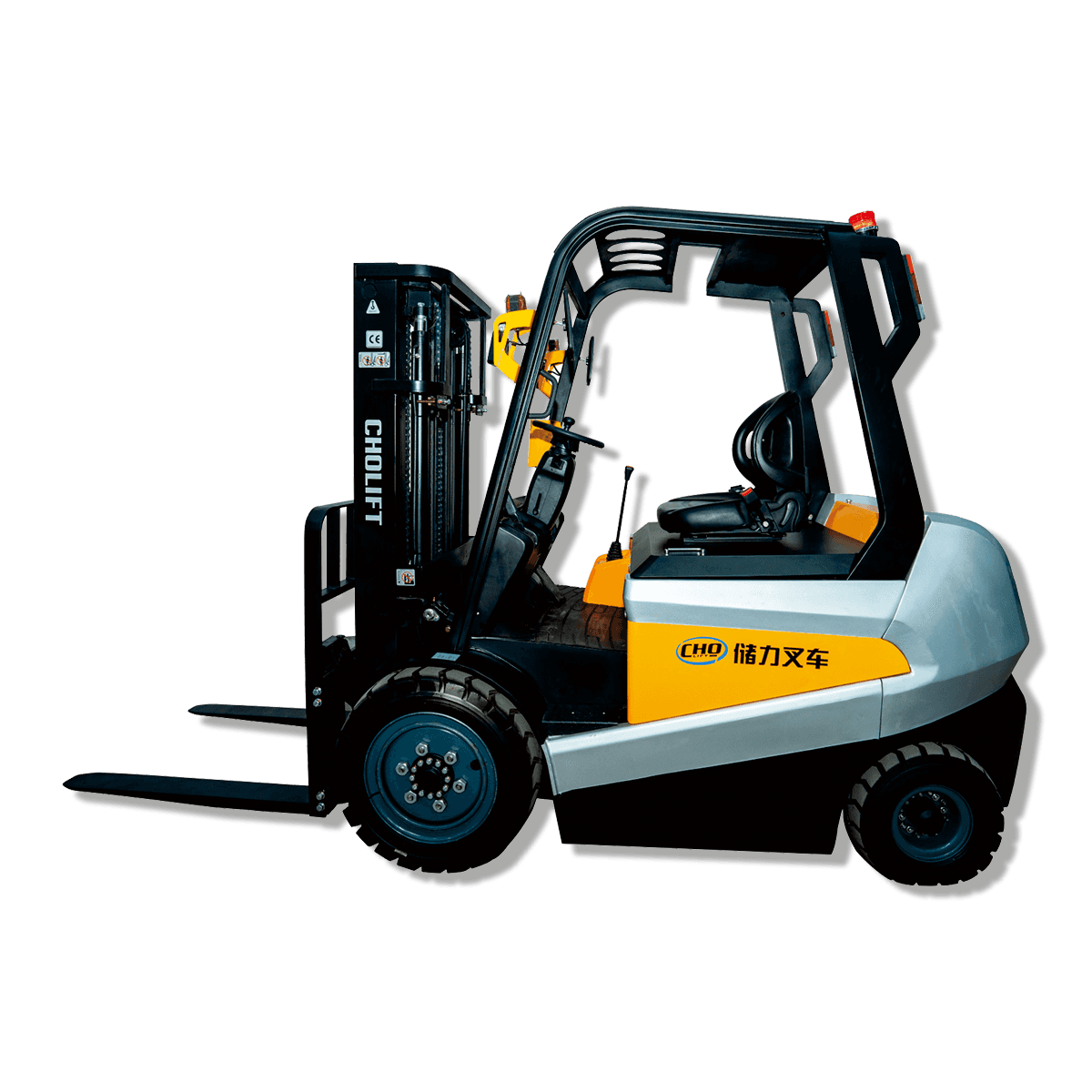 CHOLIFT Four-Point Electric Forklift CPD16 to CPD25For warehousing and distribution centers, this range covers CPD16–CPD25 models with AC drive, ZAPI control, and capacities up to 2,500 kg.View Product →
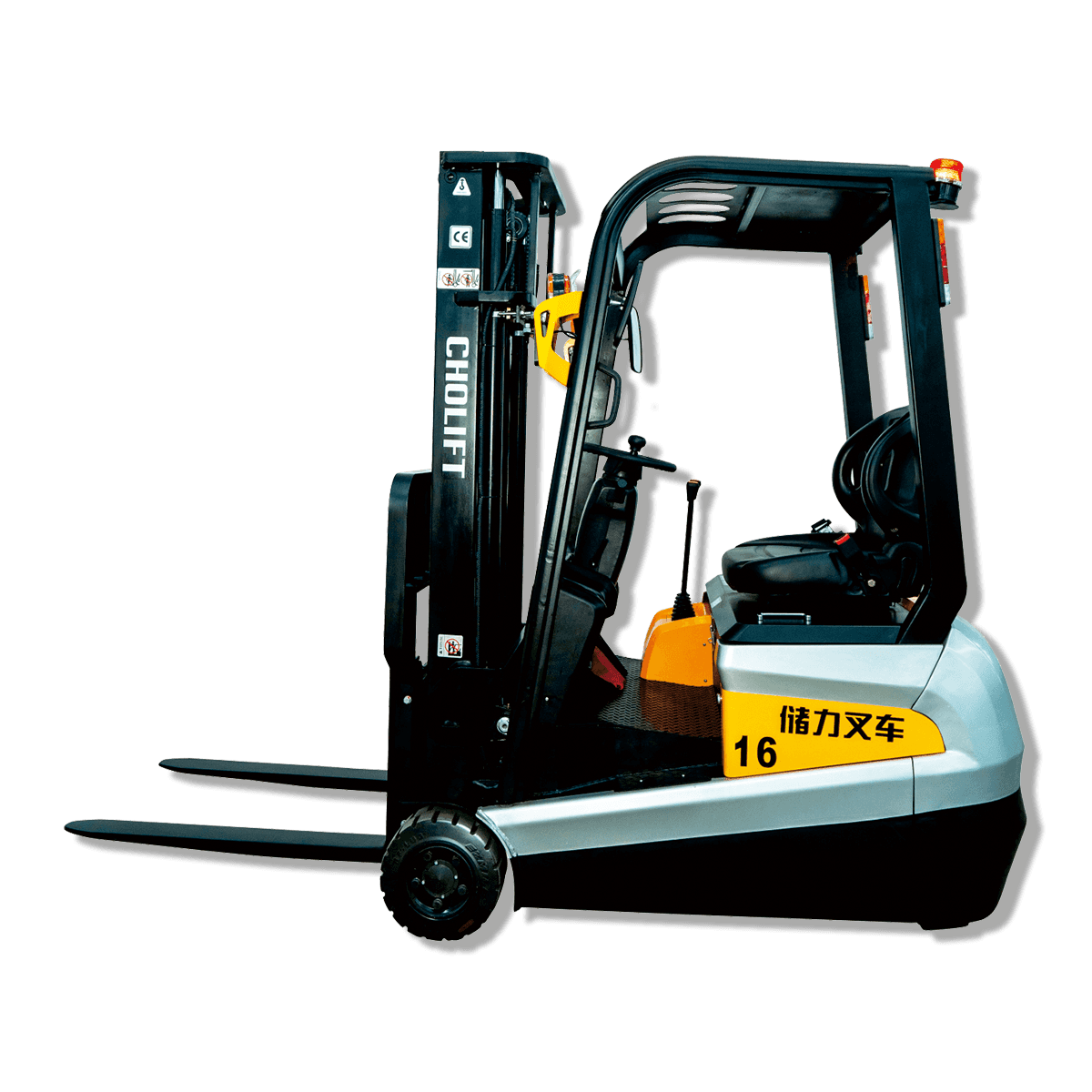 CHOLIFT Three-Point Electric Forklift CPDS12, CPDS16, CPDS18A compact three-fulcrum electric forklift for warehousing, with 1,200–1,800 kg capacities, solid tyres, side battery, and ZAPI AC drive control.View Product →
For more on how electric forklifts are used in warehousing, see this guide to warehousing and distribution centers of electric forklifts. You can also review the full electric forklift range for model-specific capacity charts.
Common Calculation Mistakes
- Using load width instead of load depth.
- Forgetting the pallet itself, which adds depth and weight.
- Adding fork length to the load center. The load center starts at the fork face.
- Mixing inches and millimeters in the same formula.
- Assuming the linear formula applies unchanged to attachments.
- Ignoring lift height and mast tilt.
- Believing a lighter load is always safe. A light load with a long load center can still tip the truck.
- Using a truck with a missing or unreadable data plate.
Practical Rules for the Warehouse
- Mark the load center on custom pallets, fixtures, or shipping containers.
- Train operators to read the data plate before every unusual lift.
- Use a floor scale or load cell for unknown loads.
- Keep a capacity chart on the truck or in the work area.
- Recalculate when the load, pallet, attachment, or lift height changes.
- Choose a truck with enough capacity at the actual load center, not just the rated capacity.
When to Ask for Engineering Support
If the load is non-uniform, very long, or handled with a heavy attachment, a simple load center calculation may not be enough. The manufacturer can provide a residual capacity chart for the exact configuration. For CHOLIFT electric forklifts, the data plate and model-specific capacity chart are the starting points. When in doubt, stop the lift and verify the numbers before the load leaves the ground.