 English
 简体中文
A pallet truck rolls out of a trailer at walking pace while an order picker crosses the same aisle wearing headphones. Neither sees the other until a horn sounds, or until it does not. That single scene sits behind most serious forklift incidents: a pedestrian and a moving truck sharing space with no physical separation and no agreed rule about who yields.
Forklift accident prevention works best as a layout, equipment and maintenance problem first, and a behaviour problem second. Separating people from trucks, zoning travel speeds, keeping loads stable and inspecting each truck before its shift removes far more risk than any refresher course. Training then locks those controls in rather than substituting for them.
Why Forklift Accidents Follow Predictable Patterns
Serious incidents are rarely caused by an exotic failure. In warehouse incident reviews the same five patterns keep appearing, and each one has a control that costs far less than the injury it prevents.
- Pedestrian contact. A person and a truck share a lane with no barrier, no mirror at the blind corner and no rule about who stops first.
- Tip-over in a turn. A raised or off-centre load, a sharp steer and a polished concrete floor are enough. Stability falls as the load centre moves forward.
- Falling loads. Split pallets, missing stretch wrap, too much forward tilt and travelling with the mast raised put the load on the floor, or on a foot.
- Crushing between truck and structure. Reversing into racking inside a 3.5 m aisle leaves the operator nowhere to go, especially when the seat belt is unbuckled.
- Mechanical failure. A worn brake, a weeping hydraulic hose or a cracked fork heel is a maintenance record problem, not bad luck.
What Speed Really Does to Stopping Distance
Speed is the cheapest variable to change and the easiest to misjudge. Braking distance grows with the square of travel speed, so going from 4 km/h to 8 km/h does not double the distance needed to stop, it multiplies it by four. Reaction time, load weight, wheel type and floor finish add to the total, but none of them change that curve.
Relative Braking Distance by Travel Speed (index: 4 km/h = 1.0)
The practical reading is zone-based limits rather than one site-wide number. Long, fully separated travel lanes can carry 10-12 km/h; mixed areas usually suit 6-8 km/h; doorways, rack ends and crossings belong at 4-5 km/h; and 3 km/h or less whenever a pedestrian is within a truck length. Electric trucks with programmable controllers let you set those limits in the machine, so the rule stops depending on self-discipline.
Engineering Controls That Remove Risk Instead of Managing It
Guardrails, bollards, marked walkways with self-closing gates, convex mirrors at blind corners and floor-projection warning lights all belong to the same family. They separate the hazard from the person, so a moment of inattention does not become an injury.
On electric equipment, several controls can be specified at purchase rather than retrofitted later: operator presence detection that cuts travel when the operator leaves the platform, load monitoring that warns before rated capacity is exceeded, automatic speed reduction as steering angle increases, and mast height sensing. It is worth confirming which safety features come as standard on the electric forklifts you are evaluating, because adding them afterwards is rarely straightforward.
A counterbalance truck such as a four-point electric forklift is a common choice for dock and racking work: two front wheels carry the load, the rear wheels steer, and braking stays predictable on smooth concrete. The trade-off is a wider turning circle, which is exactly why aisle widths and pedestrian routes should be settled before the truck is ordered.
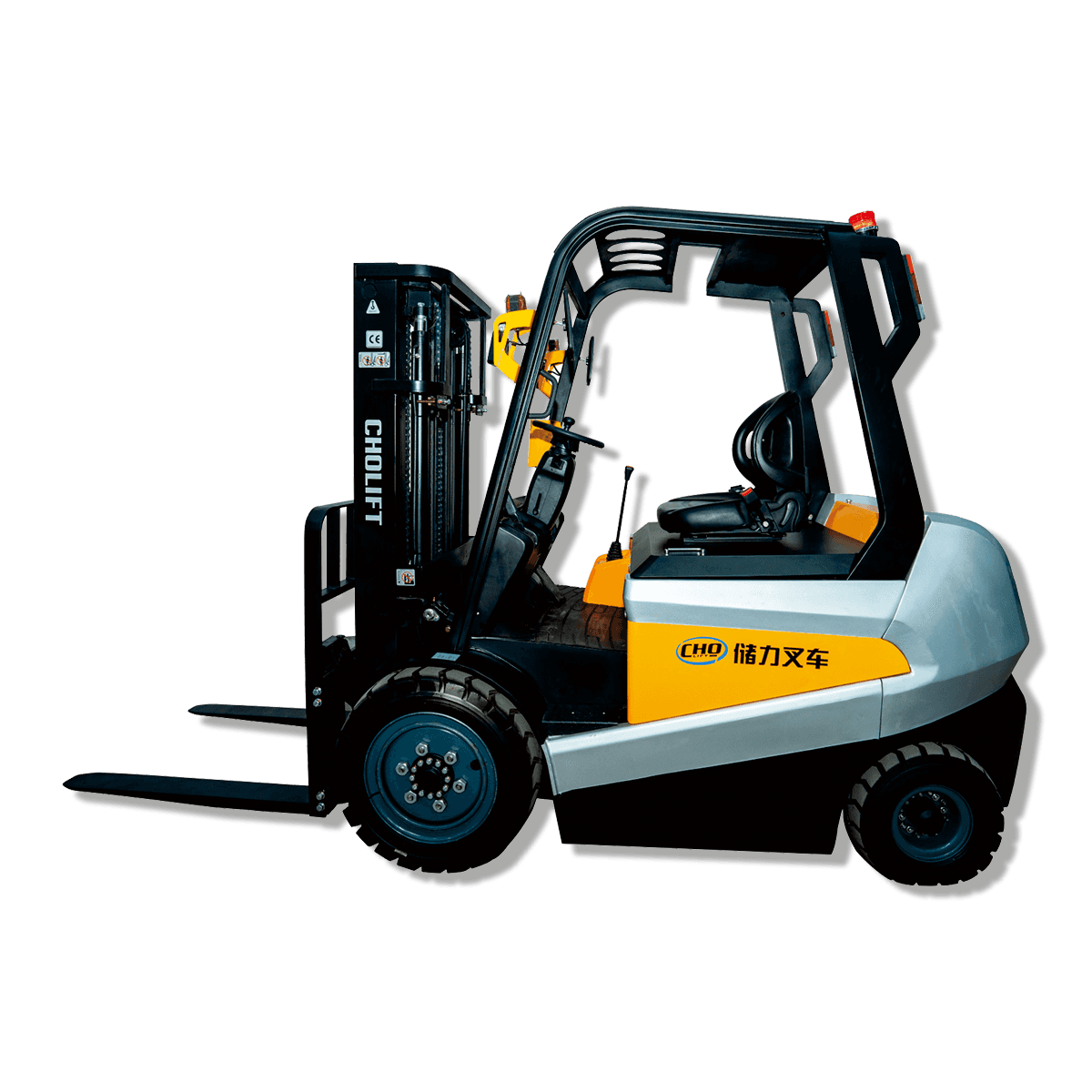 Four-Point Electric Forklift for Dock and Racking WorkElectric counterbalance forklift with AC drive, ZAPI controller, and CE certification; suitable for dock and racking tasks with predictable braking on smooth concrete.View Product →
Matching Each Hazard to a Control
The table below lines the five recurring incidents up against the engineering and procedural controls that address them. Most sites find that two or three rows account for nearly all of their near misses.
| Hazard | Typical setting | Engineering control | Procedural control |
|---|---|---|---|
| Pedestrian struck | Shared aisle, dock apron | Guardrail-separated walkway, gate at each aisle entry, mirror at blind corners | Trucks stop and sound the horn at marked crossings; no headphones on the floor |
| Tip-over in a turn | Rack ends, ramps, wet floors | Controller speed limiting, auto slow-down with steering angle, load and height sensing | Travel with the load low, no turning with a raised mast, slower on gradients |
| Load falls from forks | Trailer loading, high racking | Correct fork length, load backrest, mast tilt limits | Check pallet integrity before lifting; never travel with the mast up |
| Crushed against racking | Aisles under 3.6 m | Reach or straddle design, end-of-aisle buffers, rear-view assistance | Reverse at walking pace, keep hands inside the compartment, belt fastened |
| Brake or hydraulic failure | Any powered truck | Planned service intervals, brake and hose inspection | Pre-shift check with a defect report that can ground the truck |
The Check Routine That Catches Problems Early
Most mechanical causes of a forklift accident announce themselves weeks in advance: a soft brake pedal, a slow mast, a dark patch under the truck. A check sheet only works if a defect can actually stop the truck from going out.
- Brakes, parking brake and operator presence function
- Horn, lights, beacon and any floor-projection warning light
- Steering free play, and steering response on EPS trucks
- Forks, fork heels, load backrest and mast chains
- Hydraulic hoses, cylinders and visible leaks
- Tyres, wheels, battery condition, charger and cable
Then on a weekly or quarterly cycle, take a wider view of the building rather than the truck alone.
- Racking uprights, beam clips and floor anchors
- Floor condition, aisle markings, mirrors and signage legibility
- Speed-limit settings and telematics alerts
- Brake, load and hydraulic tests by a qualified technician
- Operator authorisation and refresher evaluation records
Choosing Equipment That Fits the Risk Profile
Equipment selection is a safety decision before it is a purchasing decision. Aisle width, load weight, lift height, floor type, indoor or outdoor use and pedestrian density all push the choice in different directions, and a truck that suits a container yard is usually wrong for a picking aisle.
Electric Pallet Trucks: Where Control Matters Most
Powered pallet trucks work in the busiest, most pedestrian-dense parts of a building, so the details matter more than the headline capacity. EPS electric steering cuts steering effort over a long shift and lets the controller reduce speed automatically as the steering angle increases, which is precisely the moment a truck is least stable. A walk-behind design also keeps the operator outside the truck and facing the direction of travel.
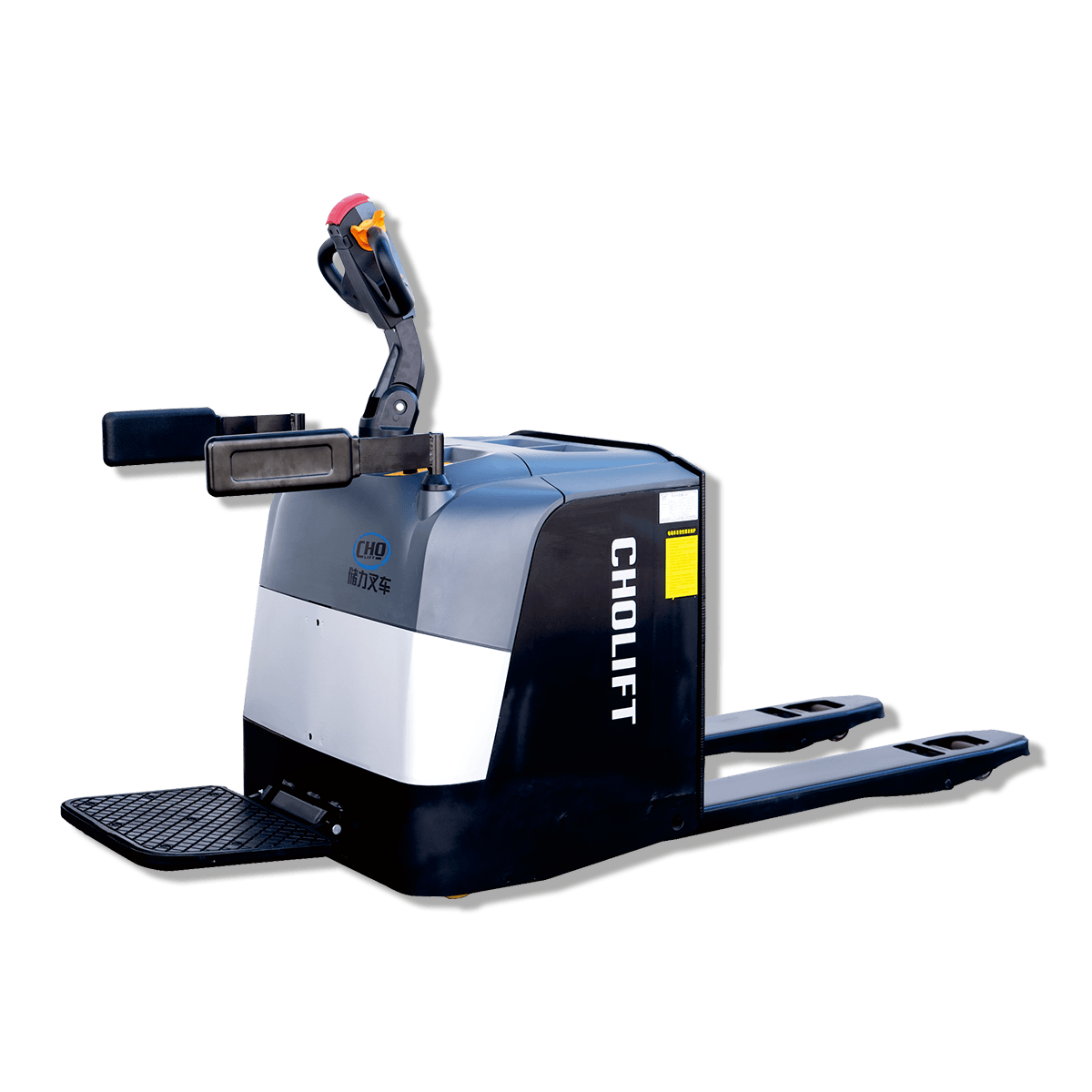 EPS Steering Electric Pallet Truck for Pedestrian-Dense AreasHeavy-duty electric pallet truck with EPS, AC drive, and 2000–3500 kg capacity; walk-behind design suits busy pedestrian areas and reduces steering effort.View Product →
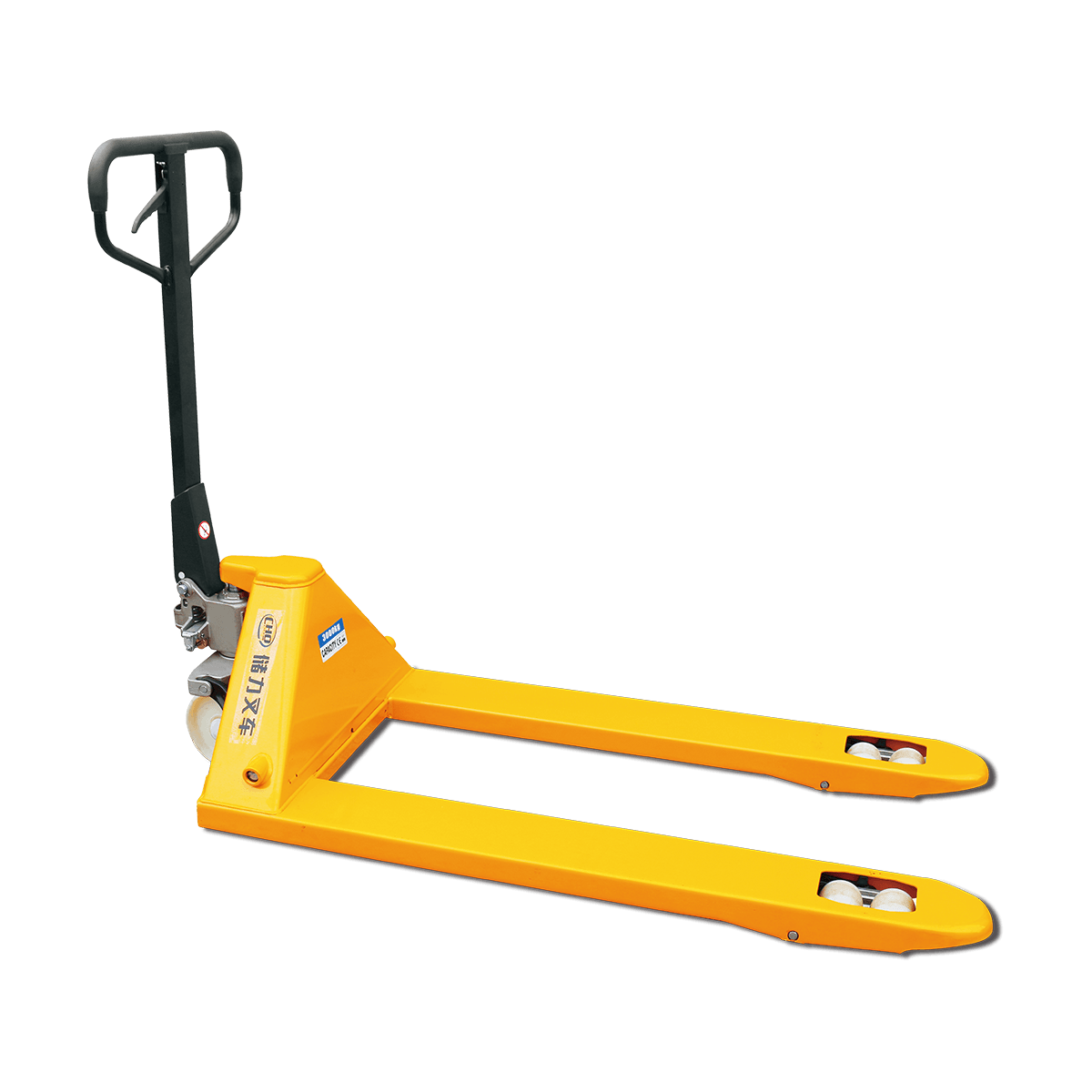
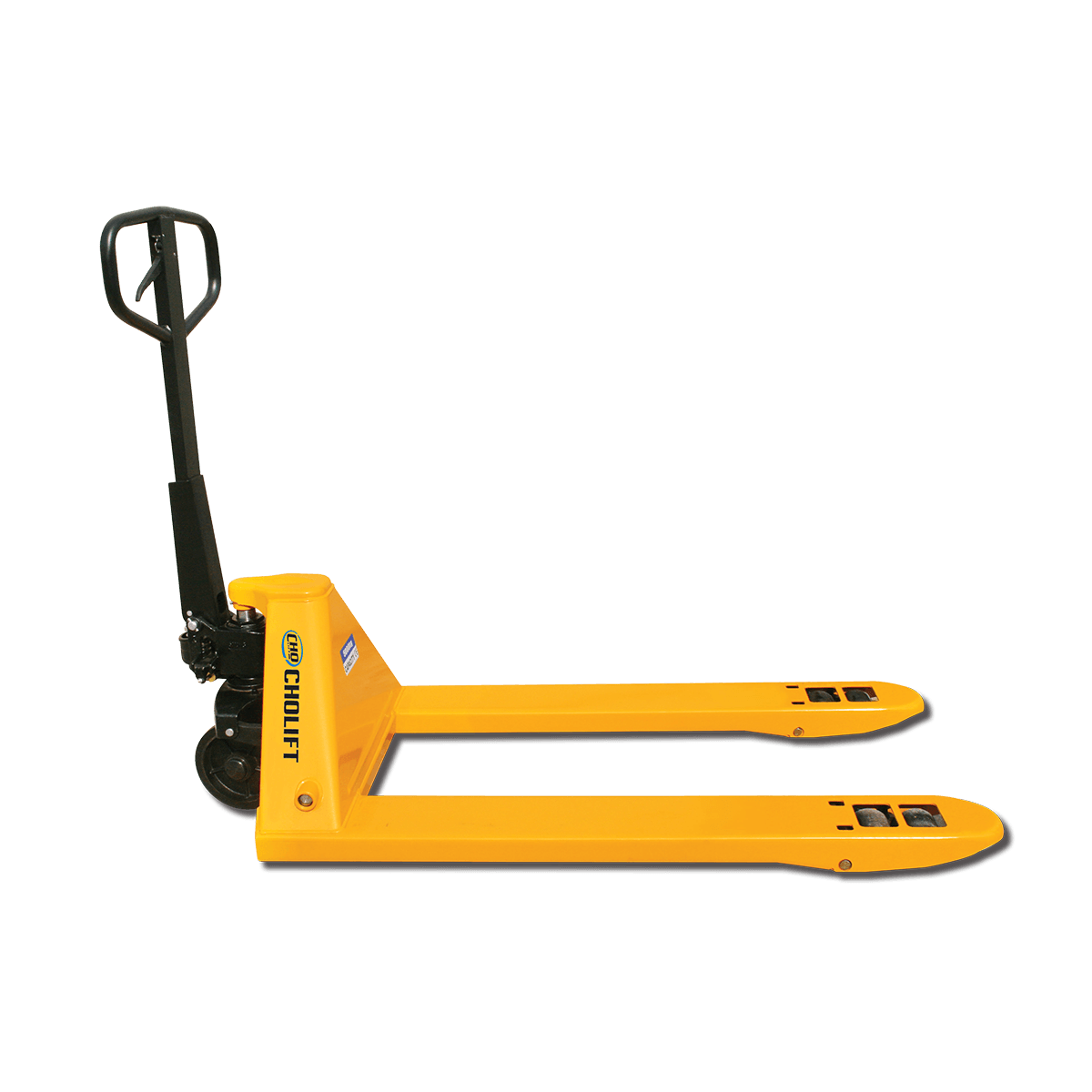
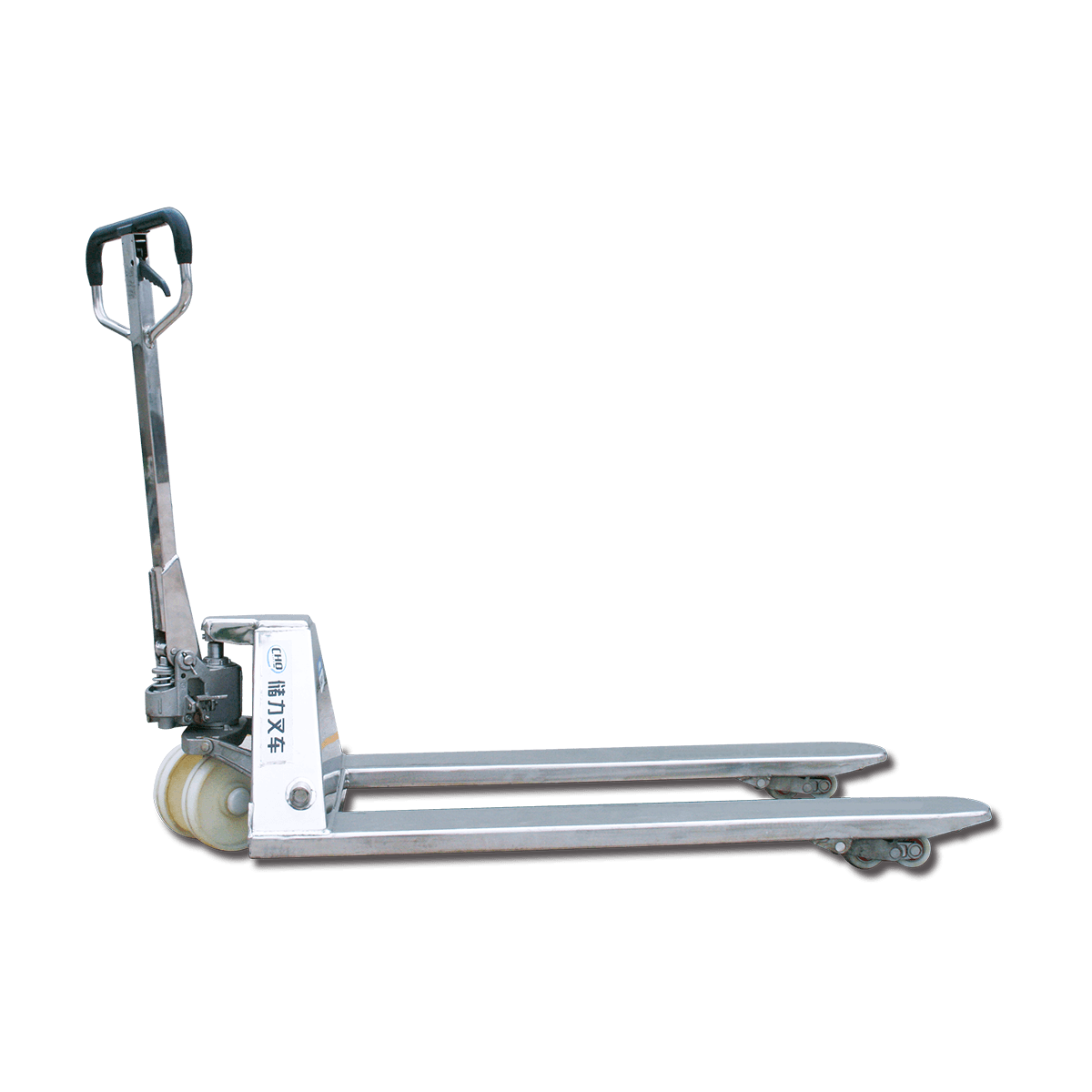
Manual equipment still has a place in the risk plan. On short, low-traffic moves, hand pallet trucks remove the powered-truck hazard altogether, at the cost of manual effort — a reasonable trade where the alternative is a two-tonne machine working beside pedestrians.
Stackers and Reach Trucks: Match the Truck to the Aisle
In aisles under 3.6 m, a reach or straddle design keeps the load within the truck footprint instead of forcing a counterbalance machine to swing inside the racking. Remember that residual capacity falls as lift height rises and as the load centre moves forward, so the figure on the data plate is not the figure available at five metres.
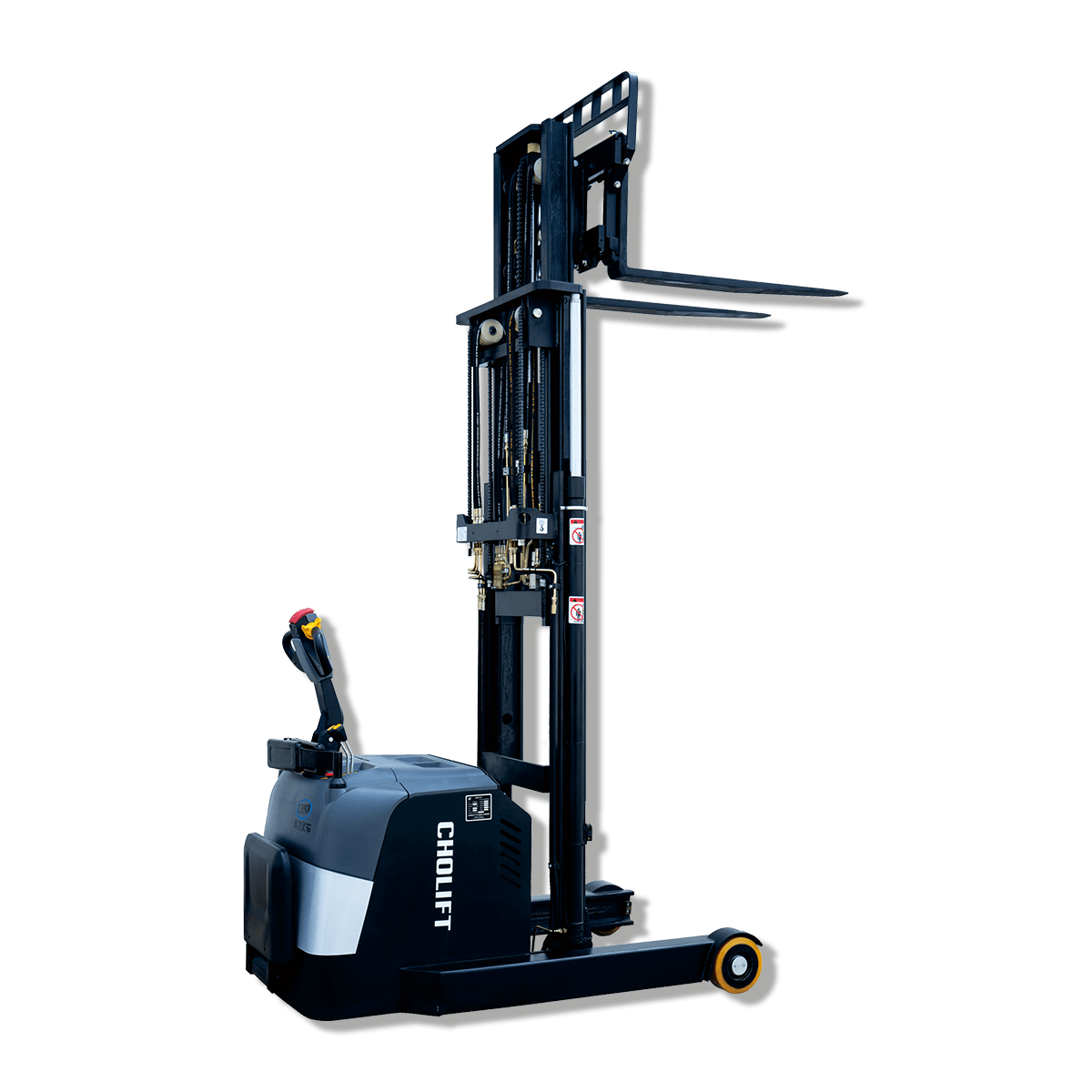 Full Electric Reach Stacker for Narrow AislesElectric stand-on reach stacker with AC drive, electronic power steering, and up to 5500 mm lift height; suitable for narrow aisle warehouse stacking.View Product →
Training, Behaviour and the Numbers Worth Tracking
Training should authorise an operator for a specific truck class, not for forklifts in general. A written evaluation at hire, every three years and after any incident is the baseline. Daily habits matter just as much: seat belt fastened before the forks move, horn at every blind corner and crossing, no riders, no travelling with a raised load, and eye contact between driver and pedestrian before either one moves.
Track leading indicators instead of waiting for injury data. Useful ones include near misses per 100 truck hours, defects found before each shift, aisle audit pass rate, speed-limit triggers logged by the controller, and the share of operators with a current evaluation. When those numbers move in the right direction, the injury rate usually follows.
Forklift accident prevention rarely needs a large programme. Pick the three areas with the worst exposure on your site — usually the dock apron, the crossing points and the defect-reporting loop — fix them this quarter, and measure the change before adding anything else.