 English
 简体中文
It is 6:40 a.m. and the first electric forklift will not lift a pallet. The battery gauge reads 45 percent, so the operator assumed the truck was fine until the lift motor stalled under load. A second truck has a chipped fork tip that no one recorded because the daily checklist had been reduced to a signature on a clipboard. Both problems were visible before the shift, and both were missed.
The fix is not a longer checklist. It is a structured electric forklift checklist that matches how electric trucks actually fail, applied daily before operation and revisited at weekly and monthly intervals. Used consistently, it keeps downtime low, catches safety defects before an accident, and gives maintenance teams a predictable workload instead of a stream of emergency repairs.
Why Electric Forklifts Need Their Own Inspection Routine
An electric forklift is not an internal combustion truck with a battery in place of an engine. Remove the engine, and you also remove engine oil, coolant, fuel, and exhaust checks. What remains is a machine whose critical systems are the battery, traction motor, hydraulic pump, electronic controller, and the wiring that connects them. OSHA's powered industrial truck standard, 29 CFR 1910.178(q)(7), requires that forklifts be examined at least daily before being placed in service, and that defects be reported and corrected. Because the standard does not list the components specific to electric trucks, a purpose-built electric forklift checklist is required.
In practice, electric trucks fail differently from engine-powered ones. Battery connectors arc and corrode, contactor tips pit, cable insulation wears through, and hydraulic seals weep at low temperatures. A checklist written for an engine-powered truck prompts an operator to check transmission fluid and exhaust while saying nothing about the battery connector causing intermittent power loss.
This is why fleets running counterbalanced electric forklifts, including CHOLIFT's four-point electric forklift models, standardize on an electric-specific inspection form instead of reusing a generic template. The inspection logic carries across brands and capacities, from compact three-wheel machines to heavy four-wheel trucks. Electric forklifts operating in warehousing and distribution centers face the same core wear patterns: mast wear from lifting cycles, tire wear from turning on concrete, and battery stress from multi-shift operation.
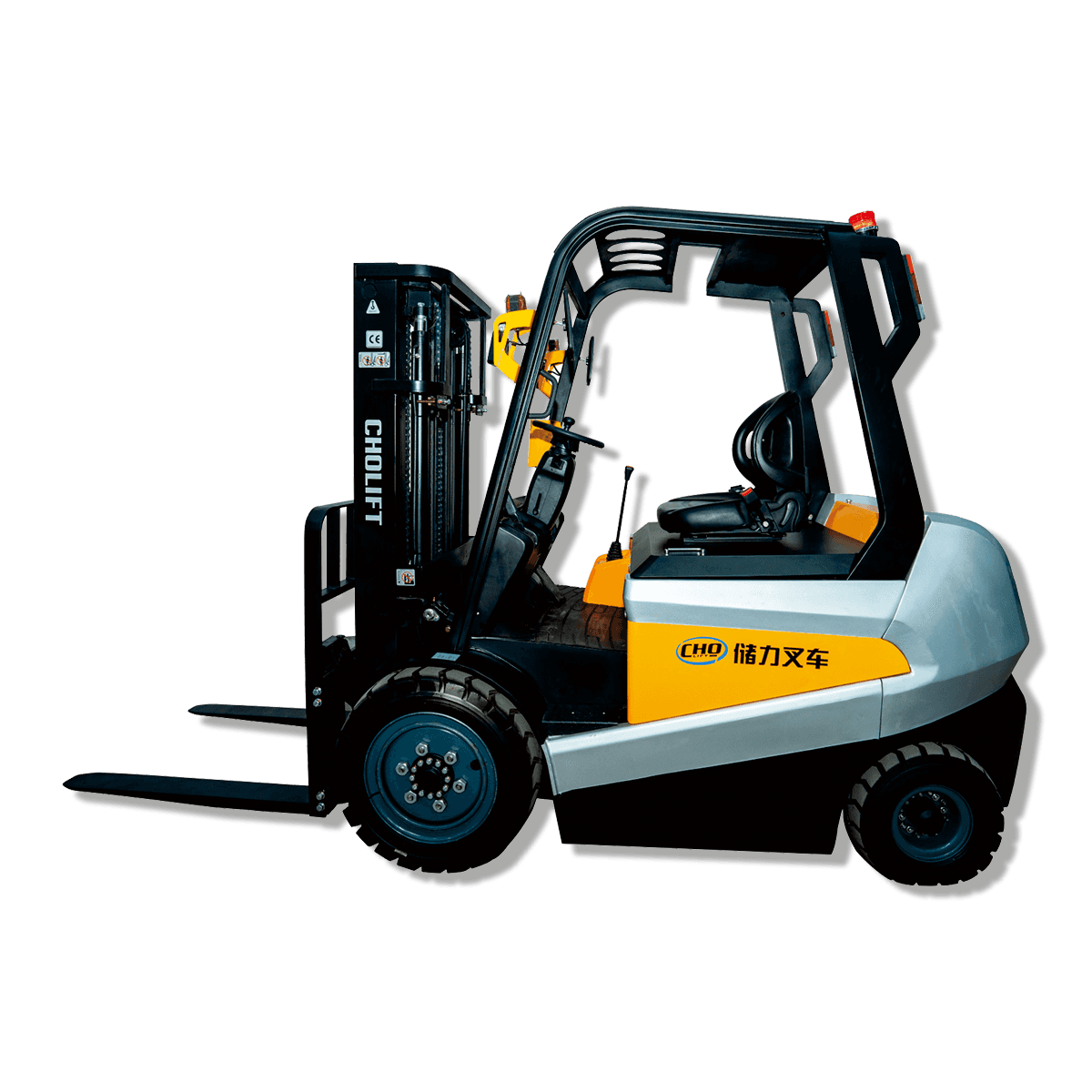 CHOLIFT Four-Point Electric Forklift CPD16 to CPD25This model line is referenced in the inspection guide for counterbalanced electric forklifts, making it a practical baseline for key-off visual, key-on functional, and battery checks.View Product →
The Electric Forklift Inspection Checklist: What to Check Before Every Shift
The checklist below groups inspections into three phases: key-off visual checks, key-on functional tests, and battery checks. Each row names the defect that should take the truck out of service. Use this as your baseline and add any items specific to your facility, such as cold-storage requirements or outdoor running surfaces.
| System area | Key checks | Defects that warrant pulling the truck |
|---|---|---|
| Forks and load assembly | Fork tips, heels, and shanks for wear; positioning locks; load backrest | Cracked or bent forks; heel thickness worn past 10 percent; missing locks |
| Mast and carriage | Chains for tension and lubrication; rollers; hoses for cuts and leaks; welds | Loose or broken chains; visible hydraulic leaks; cracked welds |
| Tires and wheels | Tread, cuts, embedded debris; wheel nuts; hub condition | Smooth or chunked tread; loose wheel nuts; damaged hub |
| Battery and cables | Charge level; electrolyte level (lead-acid); terminal corrosion; connector; cable insulation | Low electrolyte; melted or cracked connector; exposed copper; corroded terminals |
| Brakes and steering | Service brake action; parking brake; steering effort; free play | Brakes that drag or fail to hold; excessive steering free play |
| Hydraulic system | Lift, lower, and tilt function; cylinder rods; hose routing and abrasion | Fork drift; jerky or slow movements; leaking cylinders |
| Safety devices | Operator presence switch; seat belt; horn; lights; reverse alarm; overhead guard; beacon | Bypassed interlock; inoperative horn or lights; cracked overhead guard |
| Controls and gauges | Key switch; accelerator; lift and tilt levers; battery discharge indicator; hour meter | Sticky or unresponsive controls; erratic or blank gauges |
Perform the key-off checks first. Walk around the truck and inspect the forks, mast, hoses, tires, and underside for leaks. Open the battery compartment and check electrolyte and connections. Only after the visual pass should the operator start the truck and test steering, brakes, and the lift-lower-tilt cycle in an open area.
In daily walk-arounds, the most frequently reported defects are:
- Battery connectors with burn or arc marks from loose contact
- Hydraulic hoses with abraded outer covers at mast contact points
- Fork heels worn near or past the 10 percent thickness limit
- Tires with cuts or missing chunks
- Operator presence switches bypassed with straps or magnets
The same inspection sequence applies to compact three-wheel trucks, which trade some stability for a tighter turning radius in narrow aisles. CHOLIFT's three-point electric forklift models follow the same checklist structure; the rear-wheel steering arrangement and tire condition deserve extra attention because they carry the directional workload.
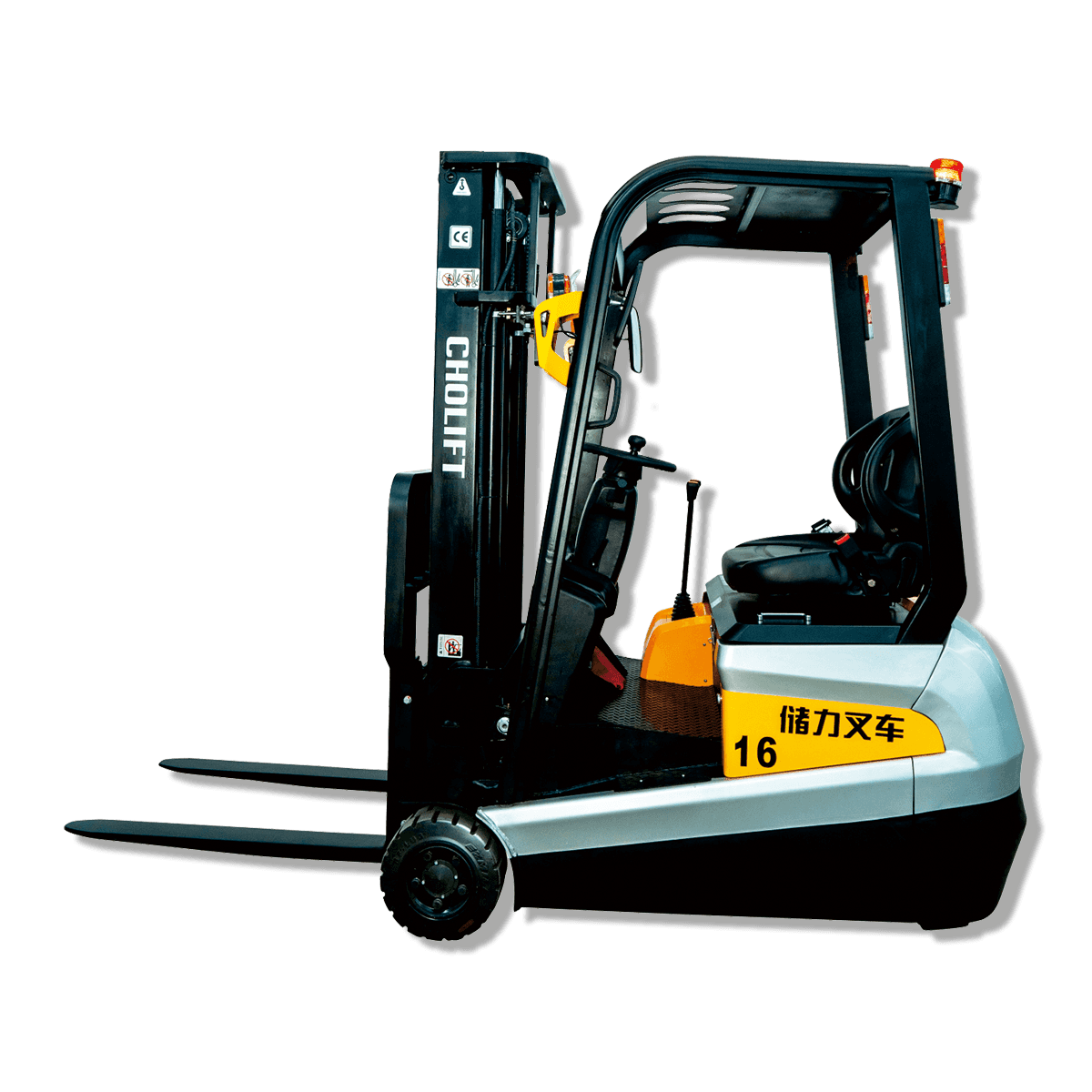 CHOLIFT Three-Point Electric Forklift CPDS12 to CPDS18Highlighted in the discussion of compact trucks for narrow aisles, this rear-wheel steering model warrants attention for tire and steering checks during pre-shift inspections.View Product →
Daily, Weekly, and Monthly Inspection Frequencies
A pre-shift inspection catches defects that appeared since the last shift, but it will not reveal slow wear or gradual battery capacity loss. That is why one checklist at one frequency is not enough. Think of the daily walk-around as the frontline screen, the weekly check as the wear-pattern review, and the monthly inspection as the systems audit. Start with the intervals in the manufacturer's service manual and treat those as the minimum. A builder such as CHOLIFT, which produces electric forklifts under ISO 9001 and has its models CE and GS certified by third-party certification bodies, documents these intervals as part of a controlled quality process.
| Frequency | Scope | Typical time |
|---|---|---|
| Daily / pre-shift | Visual walk-around; battery charge and electrolyte; lights, horn, brakes; lift-lower-tilt function | 5-10 minutes |
| Weekly | Tire wear and wheel nuts; chain tension and lubrication; hose routing; terminal torque; connector and contactor condition | 20-30 minutes |
| Monthly | Chain elongation; mast welds; brake adjustment; hydraulic oil level and contamination; controller fault codes; lead-acid equalization charge | 45-90 minutes |
For fleets that run two or three shifts, OSHA's daily examination requirement applies after each shift. Many operations combine this with a defect log so a problem found during the day shift is visible to the night shift before they operate the truck. Without that handoff, the same defect gets rediscovered instead of fixed once.
Battery Checks: The Most Overlooked Electric Forklift Component
The battery is the most frequent source of service tickets on electric forklifts, and it is the component operators are least trained to inspect. On lead-acid models, electrolyte level must be checked weekly after charging and topped up with distilled or deionized water so the plates stay covered. Terminals and cable lugs must be clean and torqued to the manufacturer's specification. A loose connection at the battery post can arc, melt the connector, and strand the truck in the middle of an aisle.
Charging discipline matters as much as physical condition. Lead-acid batteries should be charged when they reach roughly 20-30 percent remaining capacity, not after every short run. Overcharging boils off electrolyte, while chronic undercharging causes sulfation and capacity loss. Lithium-ion batteries do not require watering or equalization charges, but the battery management system and charger must be compatible and the connector pins checked for wear. As lithium packs become more common in material handling equipment, the checklist has to reflect which chemistry the truck actually carries.
Beyond charge level, add these battery-specific items to your checklist: connector pin condition, cable insulation integrity, the battery restraint bar, vent caps on lead-acid cells, and any visible swelling of the battery case. Each one represents a failure mode that a simple "battery OK" checkbox will miss.
Documentation, Defect Tagging, and Removing Trucks from Service
An inspection that is not recorded has not happened. OSHA requires operators to report functional safety defects to a supervisor and requires that defective trucks be kept out of service until repaired. It does not prescribe a specific form, which is why the best-run warehouses operate with two documents: a shift-start checklist signed by the operator and a defect log that tracks what was found, when it was repaired, and who did the repair.
Define the thresholds before an incident, not during one. A chipped fork tip, a weeping hydraulic hose, or an intermittent forward-reverse control should be treated as a "do not operate" condition. Supervisors should spot-check trucks against the previous day's checklist; if the sheet says the horn works and the horn is silent, the inspection process itself needs correction, not just the truck.
Modern electric forklift controllers record battery discharge history, thermal events, fault codes, and operating hours. A monthly review of this data, alongside the physical checklist, identifies patterns that a walk-around cannot see, such as repeated over-discharges or motor overheating. Combined with the manufacturer's recommended maintenance schedule, this gives you a defensible maintenance record and a realistic view of when a truck needs the workshop. This is especially relevant for the safety features built into modern electric forklifts, which only protect operators if the underlying systems are inspected and maintained.
An electric forklift checklist is only useful when it is specific to the machine, enforced by supervisors, and tied to a maintenance workflow. Daily checks catch the visible problems; weekly checks track wear; monthly checks verify systems and data. Built into a shift routine, the checklist turns a truck that was "probably fine" into a truck that is known to be safe, and that is the difference between a warehouse that absorbs breakdowns and one that prevents them.