 English
 简体中文
Picture a 4,000 lb pallet of steel brackets. It fits easily on a fork truck rated for 5,000 lb. The driver lifts the load, starts toward the rack, and feels the rear axle become light. The number on the rating plate does not match the actual situation because the load's center of gravity sits farther from the fork face than the 24-inch load center the manufacturer used to set the rating. The fork truck capacity calculator exists to translate that rated number into a safe, real-world number. The rule is straightforward: capacity is always stated at a given load center, and when the load center increases, the safe capacity decreases proportionally. Check the data plate first, then apply the calculation described below.
Fork Truck Capacity: Start with the Data Plate
Every fork truck from a reliable manufacturer carries a data plate, or capacity plate. The plate lists the rated capacity at a specific load center, for example 5,000 lb at 24 in (2,268 kg at 610 mm). This is not a universal limit. The truck can lift 5,000 lb only if the center of gravity of the load is 24 inches from the front face of the forks. If the load center changes, the safe lifting capacity changes as well.
The data plate also shows the empty truck weight, mast type, tire size, and any attachment restrictions. When you receive a price quote, match the stated capacity with its load center. A number without a load center is not enough. At CHOLIFT, we state the load center for every electric forklift model and test each unit against the rated figures before shipment.
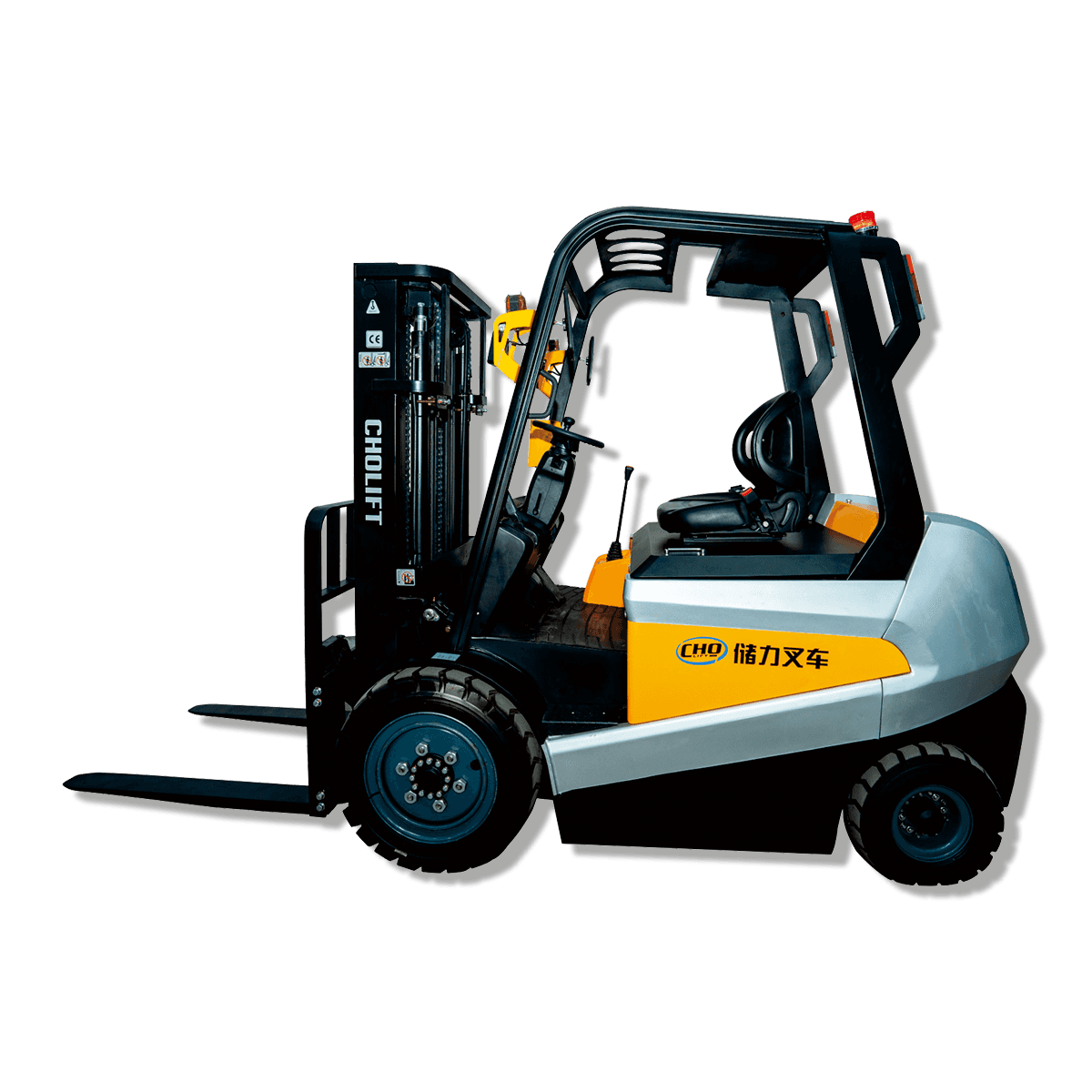 Four-Point Electric Forklift Models CPD16/CPD20/CPD20A/CPD25Check the data plate details and rated load center for these four-point electric forklifts, which are tested before shipment to match your actual load moment requirements.View Product →
How the Fork Truck Capacity Calculator Works
A fork truck capacity calculator uses the same load moment concept that lift truck designers use. Load moment is the weight multiplied by the horizontal distance from the load's center of gravity to the front face of the forks. For a given truck and mast configuration, the rated load moment is considered fixed.
Rated capacity at the rated load center creates the rated load moment. For example, 5,000 lb x 24 in gives 120,000 in-lb. If a real load has a center 30 inches from the forks, the maximum safe load is 120,000 in-lb divided by 30 in, which equals 4,000 lb.
In general, the formula is:
Rated capacity x rated load center = actual capacity x actual load center
So:
Actual capacity = (Rated capacity x rated load center) / actual load center
Most online calculators ask for these three values, and some add a step for attachment weight and attachment load-center shift.
The Load Center Rule: Why Placement Changes Capacity
Load center is not the length of the pallet. It is half of the load length for a uniform load. A 48-inch pallet with evenly distributed weight has its center at 24 inches from the fork face. A 60-inch load has its center at 30 inches. Those extra 6 inches can reduce capacity by 20 percent on a typical 5,000 lb truck.
Fork truck stability is usually explained by the stability triangle formed by the front drive wheels and the rear steer axle. When an object is lifted, the combined center of gravity of the truck and load moves horizontally and vertically. If that combined center of gravity moves outside the stability triangle, the truck tips. Moving the load center outward increases the horizontal distance, which brings the combined center closer to the edge of the triangle. This is the physical reason the calculator exists.
The table below shows how capacity decreases as load center increases on a truck rated 5,000 lb at 24 in.
| Actual Load Center (in) | Load Moment (in-lb) | Actual Capacity (lb) |
|---|---|---|
| 24 | 120,000 | 5,000 |
| 30 | 120,000 | 4,000 |
| 36 | 120,000 | 3,333 |
| 42 | 120,000 | 2,857 |
This math assumes the truck has no attachment installed. With an attachment, the load moment changes in two additional ways: the attachment adds weight and it shifts the load center outward.
Real-World Example: Calculating with an Extended Load Center
Suppose your warehouse receives pallets that are 60 inches long instead of the standard 48 inches. The fork truck is rated 5,000 lb at 24 in. You measure the actual load center at 30 in. The capacity calculator returns:
(5,000 lb x 24 in) / 30 in = 4,000 lb
If you want to lift a 4,400 lb pallet, the truck is overloaded by 400 lb even though the rated capacity is 5,000 lb. The rear wheels lose traction, steering becomes unstable, and a sharp turn can tip the truck forward or sideways.
If the load is not uniform, place the heavier half closer to the fork face. This reduces the effective load center. If you cannot move the load, estimate the center of gravity from the heavy end and use that distance in the formula. When in doubt, use a pallet of known dimensions and a known load distribution.
Handling Attachments and Net Capacity
Attachments such as side shifters, fork positioners, clamps, and rotators reduce capacity in two ways: they add weight to the front of the truck and they move the load center farther from the fork face. The result is a lower net capacity.
The common formula used by attachment suppliers is:
Net capacity = (Rated capacity - attachment weight) x (Rated load center / actual load center)
For example, a 5,000 lb truck with a side shifter that weighs 200 lb and a load center shifted from 24 in to 26 in would have:
(5,000 - 200) x (24 / 26) = 4,800 x 0.923 = 4,431 lb
This is why a simple rated capacity is never enough once an attachment is used. The attachment manufacturer publishes residual capacity data for each truck and attachment combination. Request that chart before you buy.
Choosing a Fork Truck with the Right Reserve Capacity
When buying a fork truck, add a capacity margin instead of choosing a truck that exactly matches today's heaviest load. A typical reserve of 15 to 25 percent above the calculated requirement covers load shifting, future changes in pallet size, attachments that may be added later, and normal component wear.
Before purchase, list every load you handle and the dimensions that create the longest load center. Add the heaviest load and the worst-case load center. Then compare that number with the data plate capacity of each model. For tight warehouse aisles, a three-point electric forklift is easier to maneuver, but verify its capacity at your actual load center.
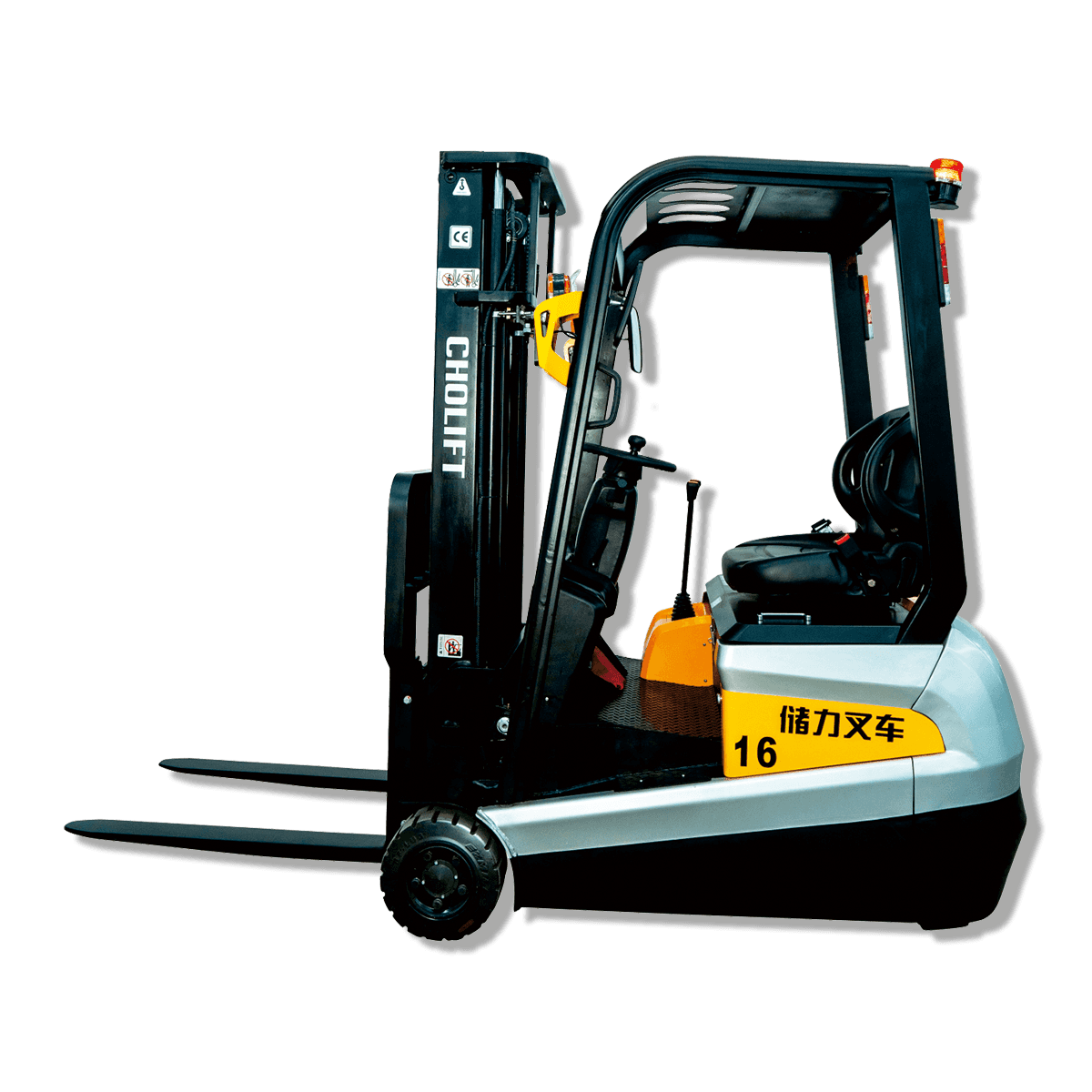 Three-Point Electric Forklift Models CPDS12/CPDS16/CPDS18Consider these maneuverable three-point electric forklifts for tight aisles, but verify their capacity at your real load center before purchase.View Product →
At minimum, capture these values for every load type:
- Weight of the heaviest load
- Length of the largest pallet or skid
- Whether the load is evenly distributed
- Attachment type and weight
- Future needs for special tools
The same capacity rules apply to all powered industrial trucks. To see why electric forklifts differ from other types in terms of runtime and duty cycle, read our guide on the limitations of electric forklifts. Then compare data plate values across our electric forklift lineup.
Fork truck capacity calculation is not an optional exercise. It is a daily safety check. Understand the load center, apply the formula, account for attachments, and verify the rating plate. When you do that, a fork truck can work at its rated limit without surprises. If you are selecting a new machine, compare capacity at your real load center rather than the headline number in a brochure.