Custom Scissor Lift Tables

Home / Product / Lift Table

Scissor Lift Tables Manufacturers

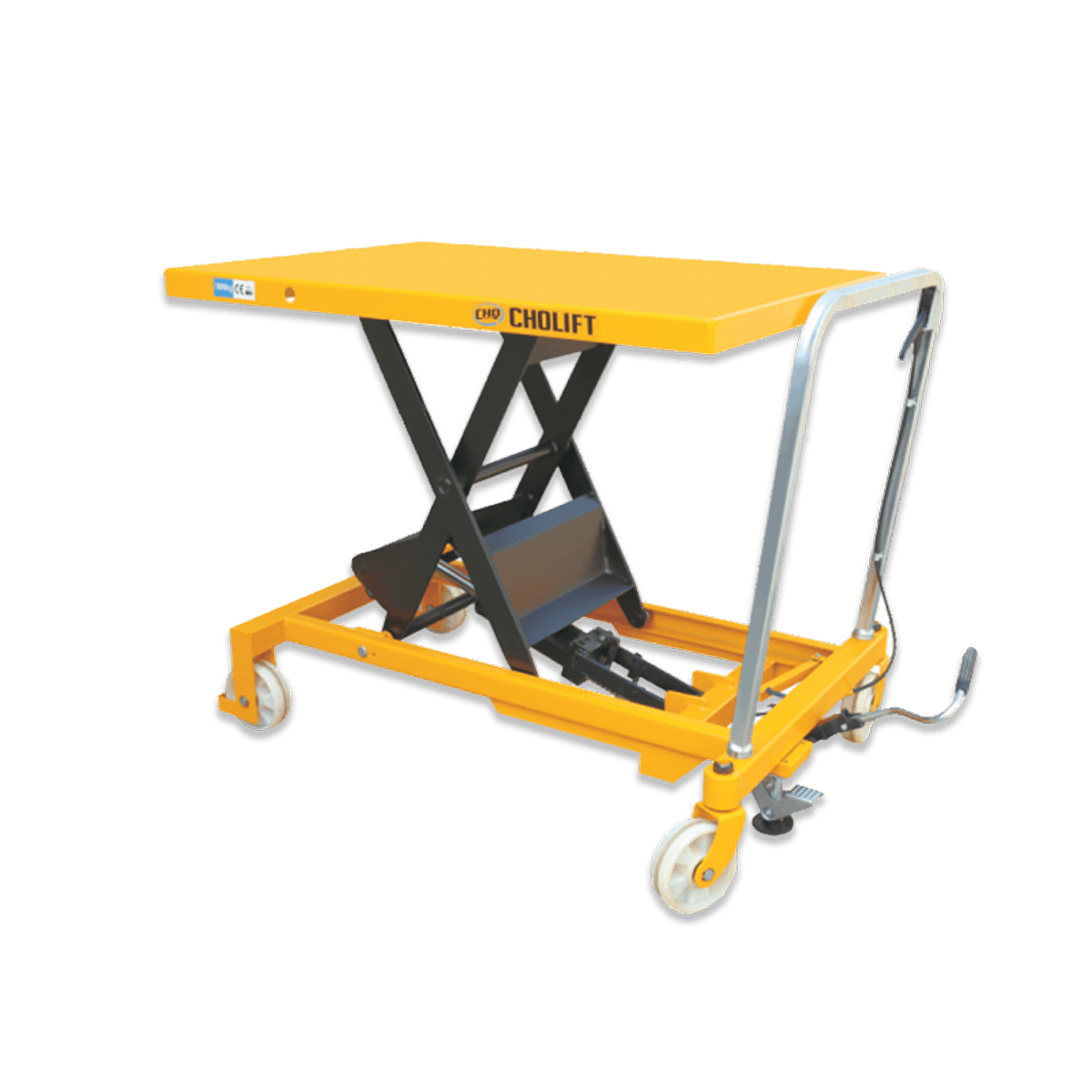
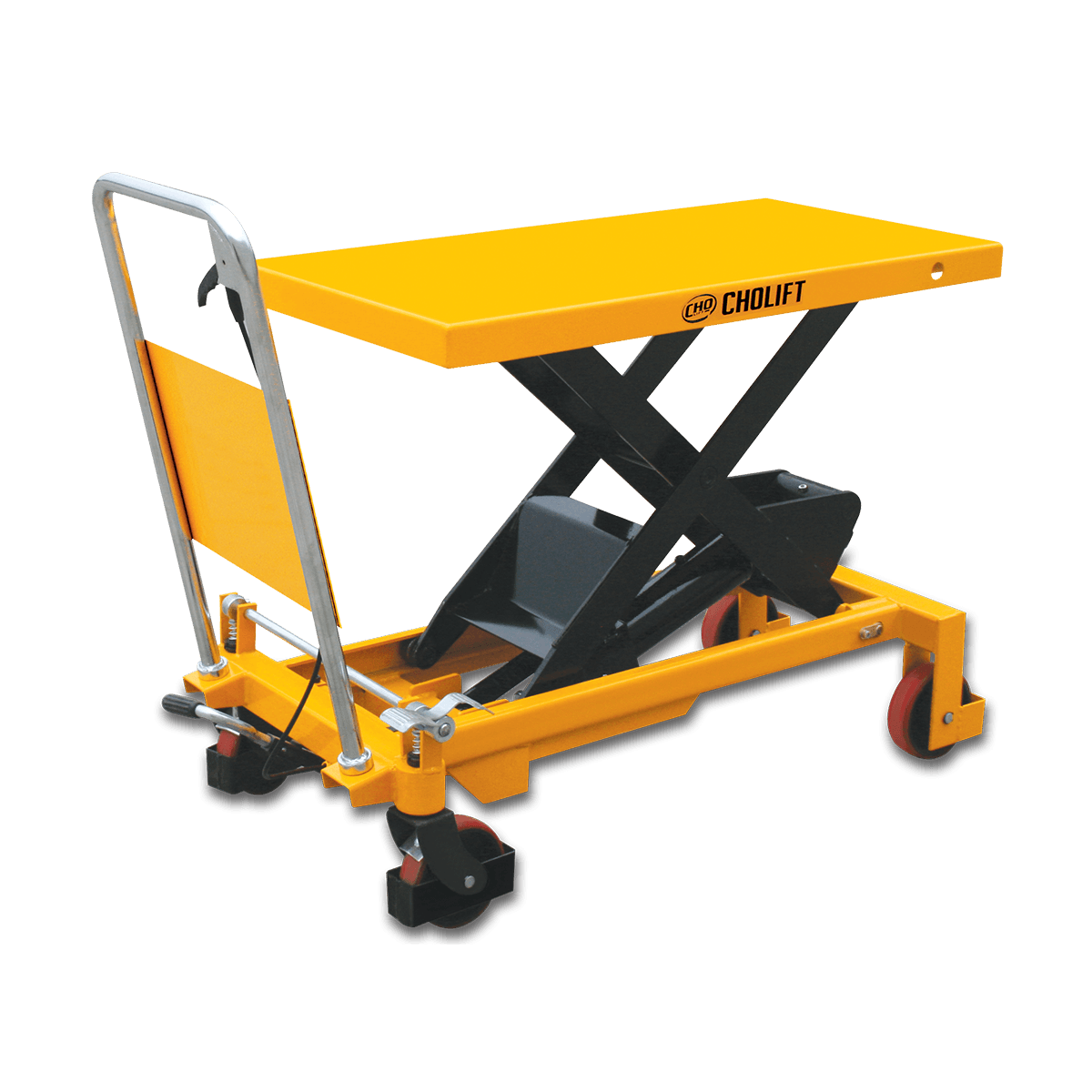
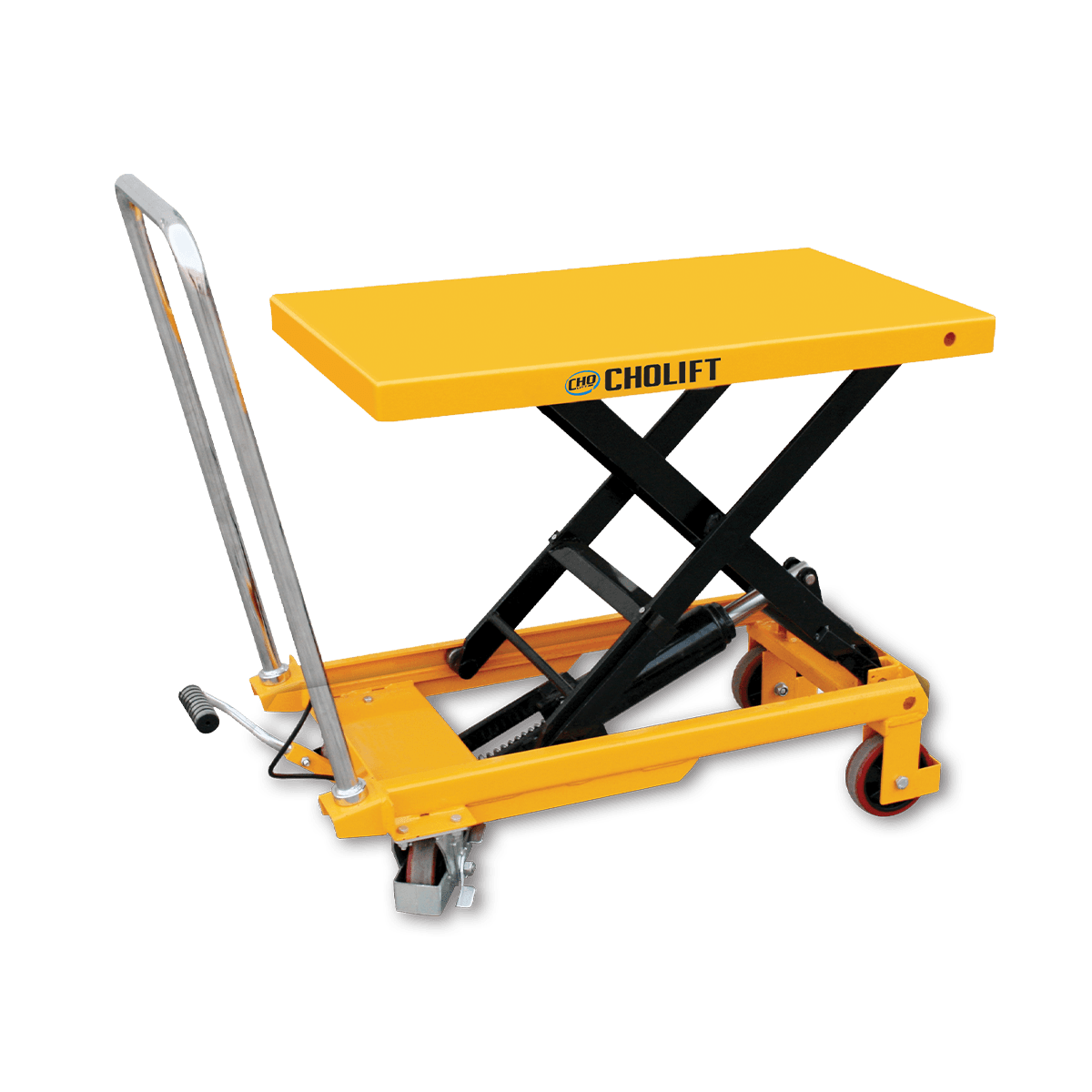
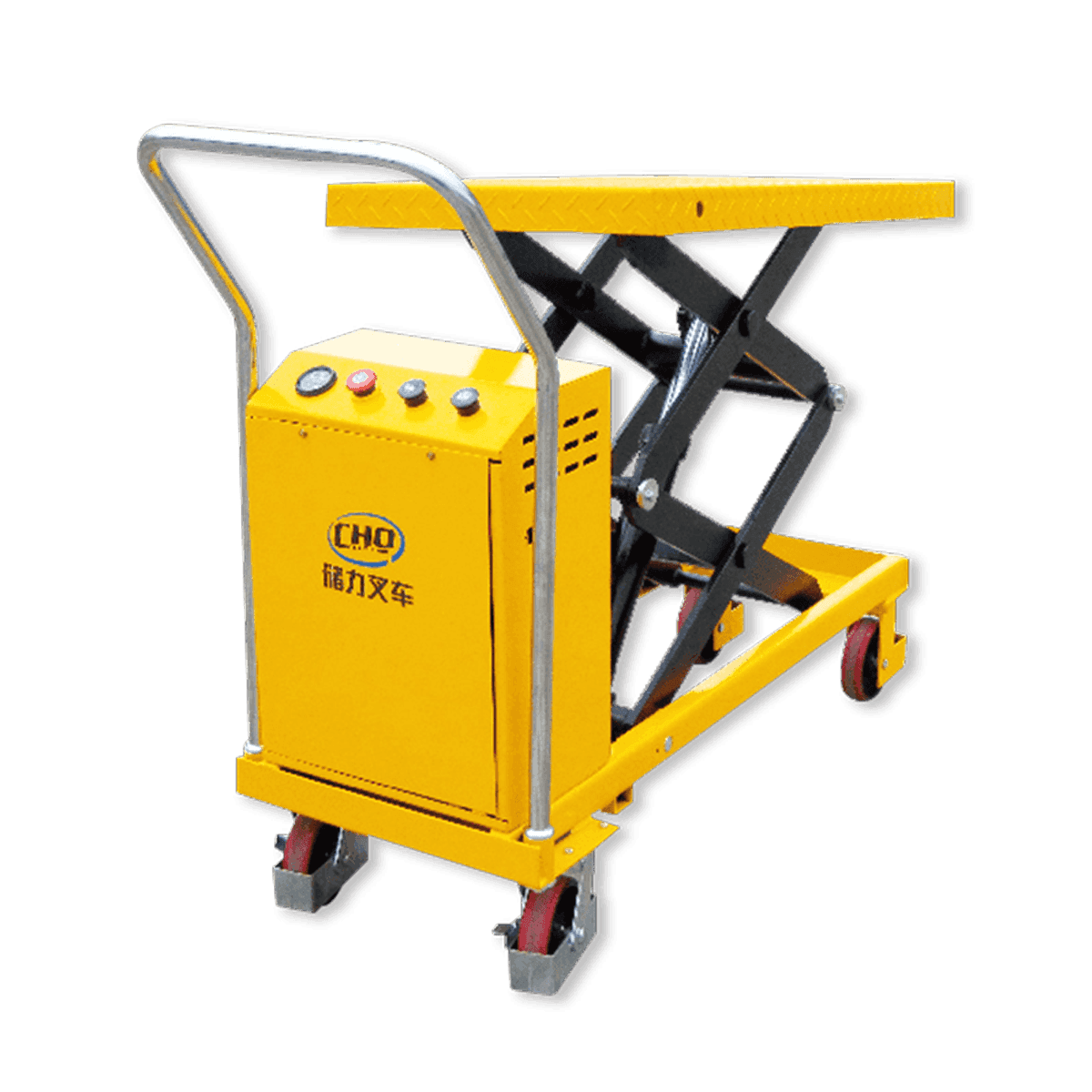
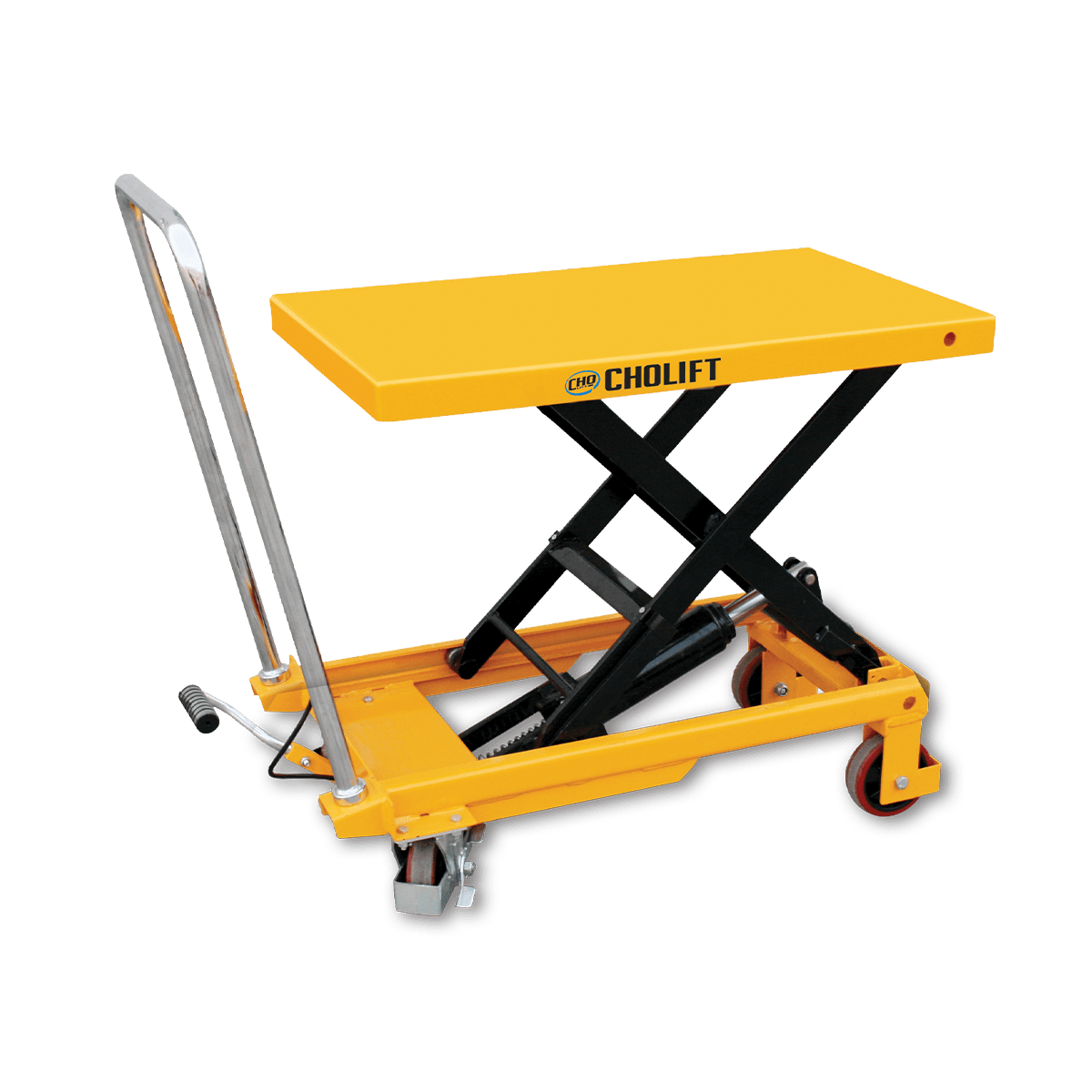
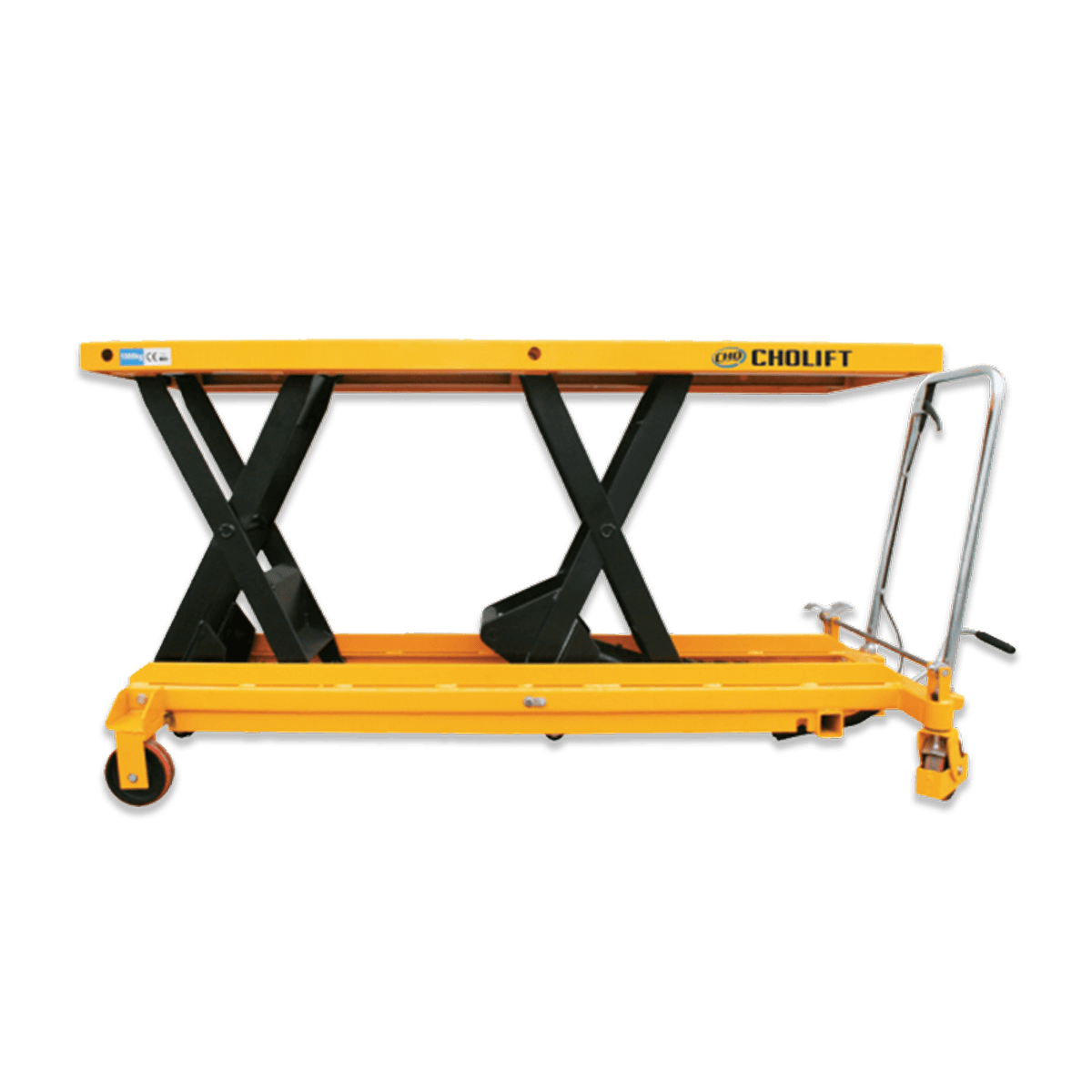
Hydraulic lift table is made of high strength steel, the design structure is reasonable, safe, stable and reliable, built-in safety valve, fully sealed oil cylinder, manual control of the hydraulic system lifting,plus unique ergonomic design, make the operator comfortable operation. Manual hydraulic handling platform car has novel design, reasonable mechanism and easy to use. It is suitable for loading and unloading, handling and stacking of drums in factories, workshops, warehouses and oil depots. Especially suitable for the chemical industry, food workshop and the use of material or ingredients, and heavy loading and unloading car, stacking, hydraulic drum truck operation, can greatly improve the work efficiency, reduce the labor intensity of workers, can also be modified for loading and unloading, lifting heavy objects, is a new ideal multi-purpose loading and unloading machinery. Capacity:150,300,350,500,800,1000,1500kg Lift height:740/900/1000/1100/1300/1500 mm
NINGBO CHOLIFT FORKLIFT CO.LTD

Who we are

WELCOME TO CHOLIFT!

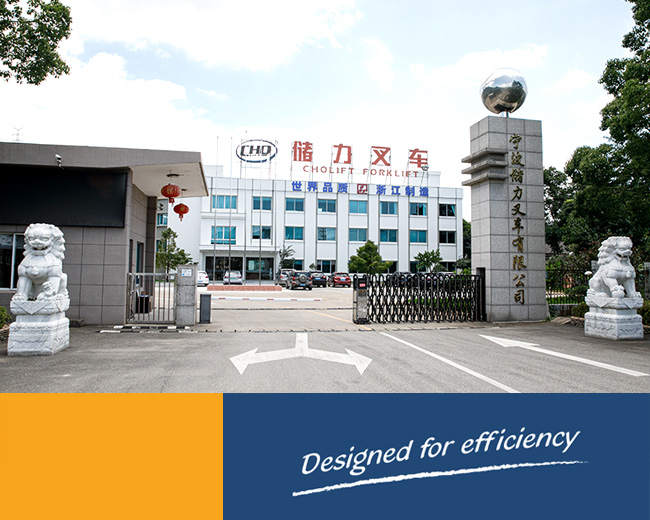
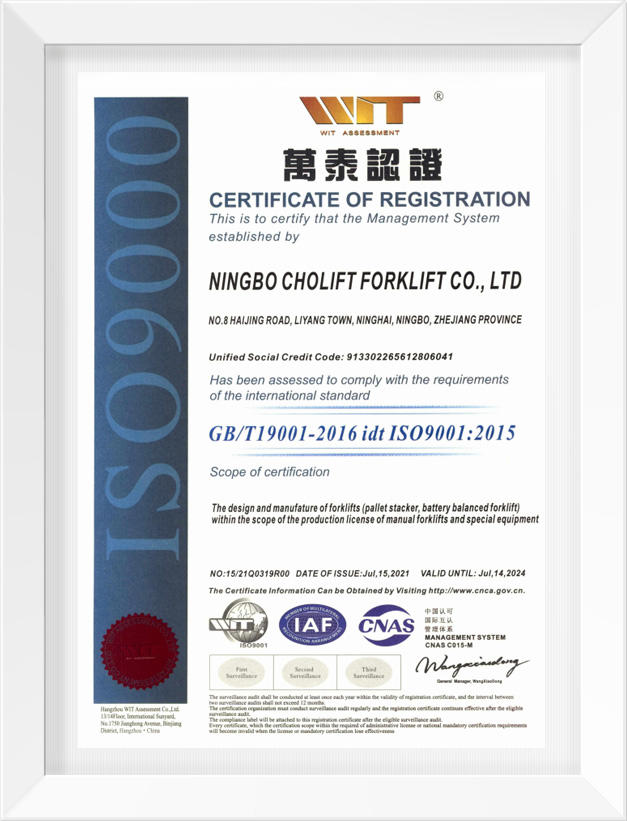
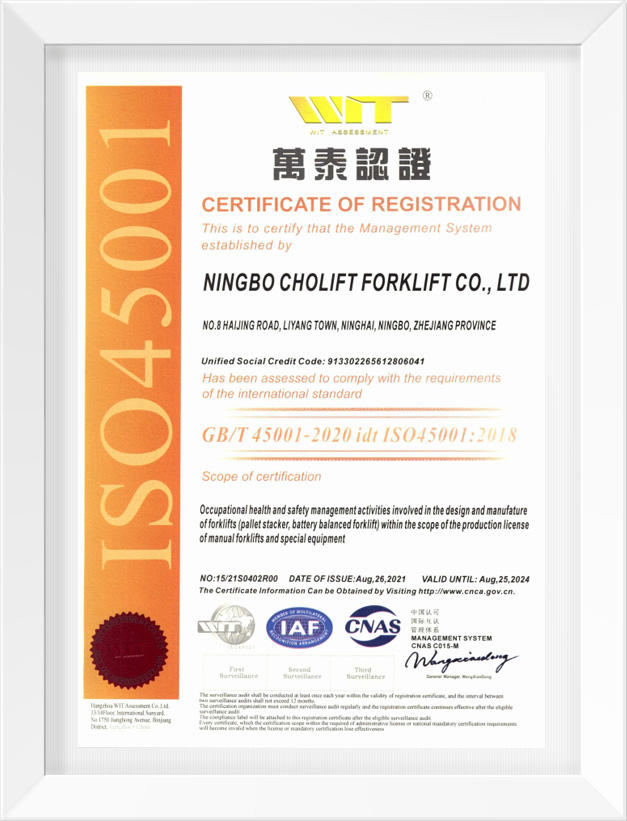
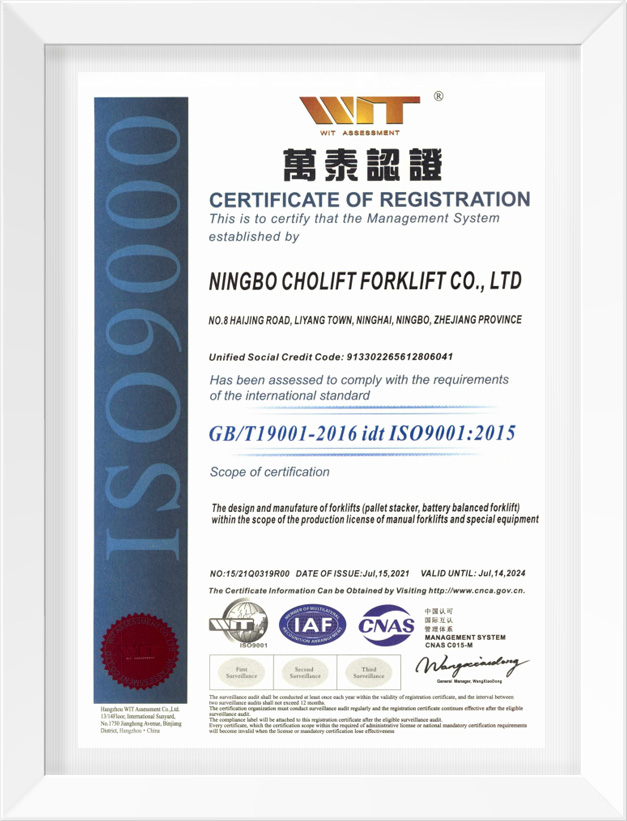
NINGBO CHOLIFT FORKLIFT CO.LTD. is a famous China Scissor Lift Tables Manufacturers and custom Hydraulic Lift Tables factory. At the same time, it is a professional manufacturer of large-scale production of storage material handling equipment and related industrial vehicles. Our company is located in Ninghai, which has a forest coverage rate of 62.5% and is known as a natural oxygen bar. With a factory area of 65,000 square meters, more than 300 employees, and fixed assets of more than 200 million yuan, we have strong comprehensive strength. "CHOLIFT Forklift" and "CHOLIFT" are the trademarks of the company's products, and we have passed and implemented the ISO9001 quality system standard. "Credit first" is the quality tenet, all products are strictly tested by ISO-related standards, and CE and GS certifications have been carried out by third-party certification companies.

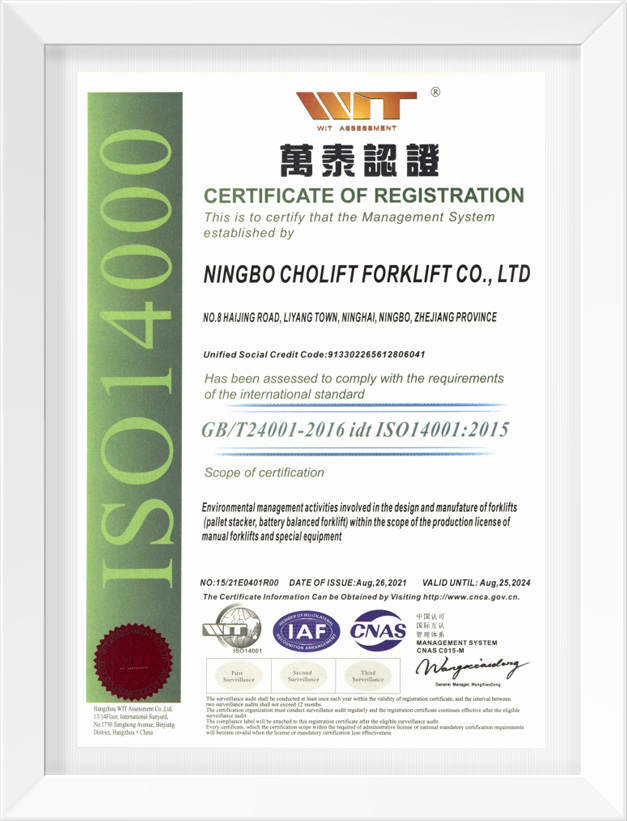
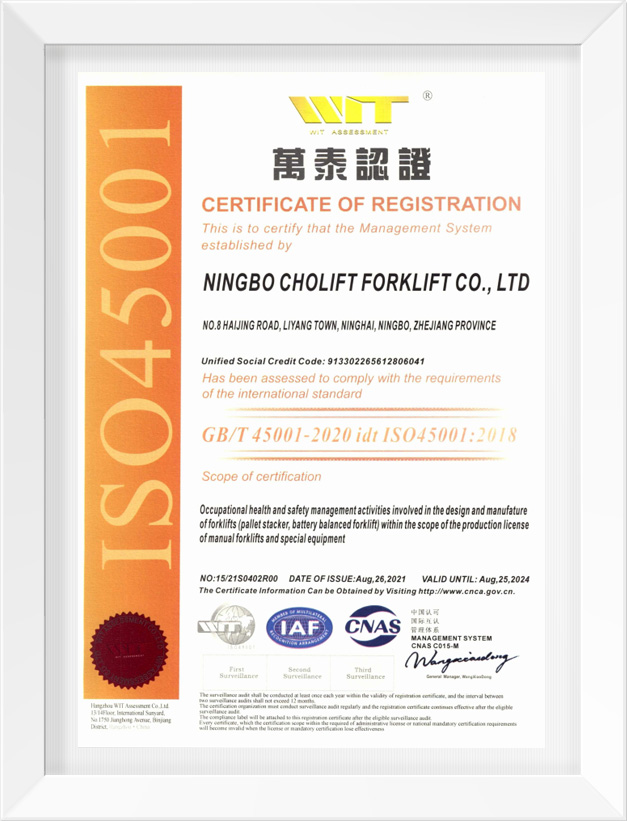
Our Certification

A technical team specializing in the design and manufacture of industrial vehicles supports the development of the enterprise, and we have a number of patents of the Self-developed products. We adhere to the concept of human-centred design, and adopt international advanced technical indicators, and pursue the purpose of leading technology throughout the process.

  • ISO9000

    ISO9000

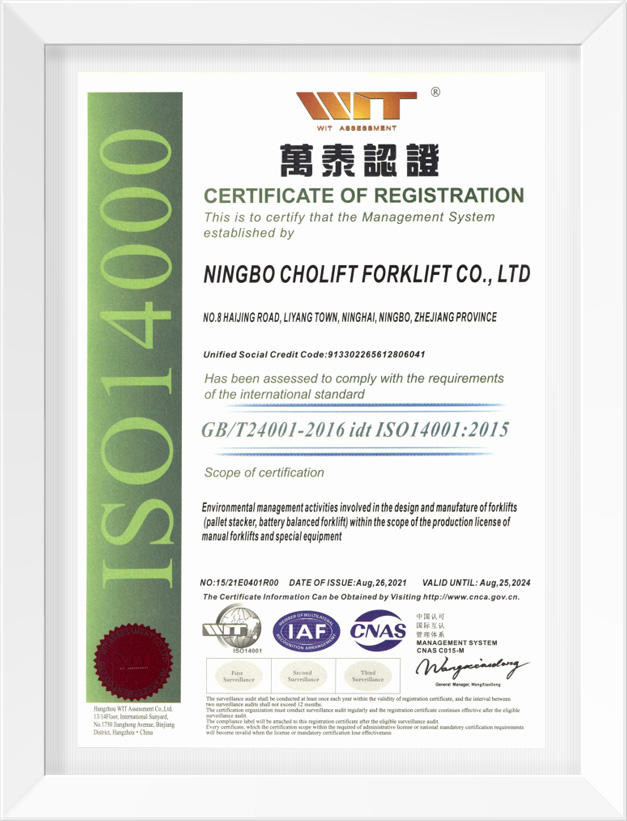
  • ISO14000

    ISO14000

  • ISO45001

    ISO45001

Related News

Understanding Wheel Function in Material Handling Equipment The wheels of a hand pallet truck play a central role in ensuring smooth movement, load stability, and operational safety in warehouses, fac...

Introduction to Hand Pallet Trucks Hand pallet trucks are widely used in warehouses, factories, and distribution centers for moving pallets and heavy loads over short distances. They are valued for th...

Introduction to Full-Electric Stackers Full-electric stackers are a type of material handling equipment used primarily in warehouses, distribution centers, and manufacturing facilities. Unlike traditi...

Recently, warehouse managers and logistics teams have been asking a similar question: "Should we switch to full-electric stackers or keep using the old hydraulic ones?" This isn't just a trendy topic—...

Introduction to Hand Pallet Trucks and Their Industrial Relevance Hand pallet trucks are essential tools in material handling, commonly used in warehouses, factories, logistics centers, and retail env...

Industry knowledge extension of this category
Will lift tables wobble or tilt when in a high position?

What makes a lift table stable at height?

Lift tables are built to lift heavy loads while keeping them steady, and stability is mainly determined by the design and construction of the lifting mechanism, the base, and the platform. A well-designed lift table will have a strong, wide base that spreads the load evenly and a lifting system that keeps the platform aligned. For example, scissor lift tables use a scissor-like structure that provides a stable lifting path, while hydraulic lift tables rely on hydraulic cylinders that push the platform up smoothly. In both cases, stability comes from how well the structure controls movement and resists bending or twisting under load.

Why do some lift tables feel shaky at high height?

There are a few common reasons why a lift table might wobble or tilt when raised. One is uneven load distribution: if the load is off-center or not balanced, the table can lean slightly, especially at higher positions. Another reason is wear and tear in the lifting components, like worn pivot points or loose bolts, which can allow extra movement. Also, if the surface the lift table is placed on is not level or firm, the whole system can shift. Finally, using a lift table that is not rated for the specific load or height can cause instability. These factors are not about the lift table being “bad,” but about matching the tool to the job and keeping it well maintained.

How do scissor lift tables handle stability at height?

Scissor lift tables are widely used because their structure naturally supports vertical lifting with minimal side movement. The scissor arms create a stable geometry that spreads forces evenly as the table rises. However, stability depends on the quality of the scissor arms, the precision of the pivot points, and the rigidity of the base. If the scissor arms are too thin or the pivot points become worn, the table may feel less stable at higher heights. That’s why regular inspection of key joints and fasteners is important. In a factory like CHOLIFT, where ISO9001 standards are followed and products are tested according to ISO-related benchmarks, the design focus is on ensuring these components stay aligned and strong through repeated cycles.

How do hydraulic lift tables keep steady during lifting?

Hydraulic lift tables use one or more hydraulic cylinders to raise and lower the platform. The key to stability is the smooth control of hydraulic pressure and the strength of the cylinder mountings. A properly sized cylinder and a well-supported base prevent the platform from drifting sideways. Hydraulic systems can be very stable, but they need correct fluid pressure, clean hydraulic oil, and properly sealed fittings. If the hydraulic fluid is low, contaminated, or the system has leaks, the platform may rise unevenly or settle at an angle. In real-world use, this often shows up as a slow tilt or wobble when the table is high.

How does load distribution affect wobble and tilt?

Load distribution is one of the biggest factors in lift table stability. When a load is centered, the lifting mechanism has a balanced force to work with. When the load is off-center, the lifting arms or hydraulic cylinders experience uneven pressure, which can create a tipping force. This effect becomes more noticeable at higher heights because the center of gravity shifts upward, and small imbalances create larger tilting moments. Even if the lift table is designed for the weight, uneven placement can still cause wobble. That is why training operators to place loads correctly is as important as the machine itself.

What role does the base and ground surface play?

The base of the lift table is where stability starts. A wide, rigid base helps resist tilting forces and keeps the table from rocking. But even the strongest base can be affected by the surface it stands on. If the ground is uneven, soft, or slippery, the lift table may shift when raised. This is especially relevant in warehouses and production floors where spills or uneven concrete can occur. CHOLIFT’s production environment and testing process emphasize stable operation, and their lift tables are built to meet strict standards, but the final stability still depends on how the equipment is installed and used on site.

How do safety features reduce wobble risks?

Many lift tables include safety features that reduce wobble and improve control. Features like overload protection, safety locks, and anti-slip platforms help prevent unsafe conditions. Overload protection prevents lifting beyond rated capacity, which can strain the structure and cause instability. Safety locks can hold the table in place during maintenance or when it is raised for a longer period. Anti-slip surfaces keep the load from shifting during lifting. In addition, proper maintenance of these safety systems is critical, as a worn or broken safety lock can allow movement that should not happen.

How can you check for wobble before using a lift table?

Before using a lift table, a quick check can help catch stability issues early. First, ensure the platform is level and the base is fully supported on a firm surface. Next, check that all bolts and pivot points are tight and show no signs of wear. Inspect hydraulic lines and cylinders for leaks or damage, and make sure the load is placed evenly on the platform. If the table is equipped with safety locks or stops, verify they are functioning properly. These checks help reduce the risk of wobble and ensure the lift table performs as expected at height.

What does a stability checklist look like in real operation?

Here is a simple stability checklist that operators can follow. This checklist focuses on key areas that directly affect wobble or tilt. The idea is to keep the lift table working within its design limits and to catch small issues before they grow into bigger problems.

Check Item What to look for Why it matters
Load placement Centered and balanced Prevents off-center tilt
Surface level Firm and even ground Reduces base shifting
Fasteners All bolts tight, no wear Maintains structure rigidity
Hydraulic system No leaks, correct fluid Ensures smooth lifting
Safety locks Engage and hold Prevents unintended movement

What should you consider when choosing a lift table for high lift work?

When selecting a lift table for high lift tasks, consider both the lifting height and the load type. A higher lift height increases the need for a stable structure and a well-designed base. The weight capacity must be enough not just for the load, but also for the load’s center of gravity and movement during lifting. If the work involves frequent lifting at high levels, a model with a wider base, stronger scissor arms, or multi-cylinder hydraulic systems may provide more stability. CHOLIFT’s production capacity and testing standards mean their lift tables are designed with consistent quality, but the final choice should still match the specific workflow and load conditions.

FAQ

Q: How do lift tables help improve productivity in warehouses?

A: Lift tables are designed to assist with the efficient handling of materials in warehouses by providing a simple way to raise and lower items to ergonomic working heights. By adjusting the height of pallets or goods, they reduce the need for manual lifting, which minimizes worker fatigue and enhances overall efficiency. This ability to quickly lift and position materials helps streamline warehouse operations and ensures smoother workflows.

Q: Can lift tables be used in outdoor environments?

A: Lift tables can be used in outdoor environments, but certain considerations must be made, such as exposure to weather conditions. For instance, tables used outdoors should have corrosion-resistant materials like stainless steel or specific coatings to protect them from rust and degradation caused by moisture. CHOLIFT’s lift tables are designed to meet various environmental conditions, ensuring their durability even in less-than-ideal settings.

Q: What maintenance is required for lift tables to ensure long-term performance?

A: Regular maintenance is essential to keep lift tables in optimal working condition. This includes checking hydraulic systems for leaks, ensuring that the lifting mechanism operates smoothly, and inspecting structural components for signs of wear. Periodically cleaning the table and lubricating moving parts also helps reduce friction and extend the life of the equipment. CHOLIFT recommends adhering to the manufacturer’s maintenance schedule for the best results.

Q: Are there any weight limits for lift tables?

A: Yes, every lift table comes with a specified weight limit, which must not be exceeded to ensure safe operation. Overloading a lift table can lead to structural failure, hydraulic issues, and safety hazards. CHOLIFT's lift tables are engineered with high-quality materials to accommodate a range of weight capacities, but it is crucial to follow the manufacturer’s guidelines to prevent accidents and ensure longevity.

Q: How can I choose the right lift table for my business needs?

A: When selecting a lift table, it is important to consider factors such as the maximum load capacity, the required lifting height, and the type of materials being handled. You should also assess the available space in your facility, as the size of the lift table will impact its placement and maneuverability. CHOLIFT offers a variety of lift tables with different specifications to suit different operational needs, and our team can assist with choosing the right model based on your specific requirements.

Q: Can lift tables be customized for specific applications?

A: Yes, lift tables can be customized to suit unique operational needs. Customizations may include adjustments to load capacities, platform sizes, lifting heights, or even specific features such as anti-slip surfaces, special coatings for corrosion resistance, or additional safety measures. CHOLIFT is committed to providing tailored solutions for clients, ensuring that their lift tables meet the precise demands of their work environment.

Q: Are there safety features on lift tables to prevent accidents?

A: Safety is a top priority in the design of lift tables. Many models come equipped with features such as automatic overload protection, emergency stop buttons, safety barriers, and anti-slip surfaces to minimize the risk of accidents. CHOLIFT's lift tables are designed with these safety features in mind, ensuring that operators can use the equipment without risk of injury or damage to materials.

Q: How do lift tables improve ergonomics in the workplace?

A: Lift tables play a key role in enhancing workplace ergonomics by reducing the need for workers to bend, reach, or lift heavy items. By positioning materials at an ergonomic height, they help prevent repetitive strain injuries and fatigue, promoting a safer and more comfortable work environment. CHOLIFT’s lift tables are designed with ease of use in mind, ensuring that employees can perform tasks efficiently while minimizing physical strain.

Eagerly Anticipates the Market Tidal Current, Guiding The Consumption Concept.