
 English
 简体中文
简体中文.png?imageView2/2/w/1500/h/1500/format/png/q/100 "MINI LITHIUM ELECTRIC PALLET TRUCK")
MINI LITHIUM ELECTRIC PALLET TRUCK
Full-Electric Pallet Trucks Manufacturers
CHOLIFT’s electric pallet truck is designed and manufactured specifically for use in industry applications. In addition to the advantages of stable load and easy use, our electric pallet truck needs to be equipped with fast handling capabilities that can withstand severe conditions. Whether in warehouse work, cargo delivery, inventory replenishment or in heavy manufacturing, the strength and durability of the full series electric pallet truck keeps the cost of ownership to a minimum.
In order to adapt to a variety of tasks in actual storage operations, heavy-duty electric pallet trucks need to maintain good driving performance under complex ground conditions, and can effectively "over" obstacles, while fully absorbing vibration from the ground,Effectively reduce the impact of the vehicle chassis, wheels and operators, ensure more comfortable operators at the same time, but also protect the body parts, extend the service life of the body.
Capacity:1500,2000,2500kg,3000,3500kg
Forks:550*1150mm / 680*1150mm
Battery:Lead-acid 24V/85Ah,125Ah,210Ah,280Ah
Lithium battery 24V/30Ah,50Ah,90Ah,150Ah
.png?imageView2/2/w/1500/h/1500/format/png/q/100 "SCALE ELECTRIC PALLET TRUCK")
.png?imageView2/2/w/1500/h/1500/format/png/q/100 "Economic Electric Pallet Truck")
.png?imageView2/2/w/1500/h/1500/format/png/q/100 "PEDESTRIANISM ELECTRIC PALLET TRUCK")
.png?imageView2/2/w/1500/h/1500/format/png/q/100 "EPS STEERING ELECTRIC PALLET TRUCK")
.png?imageView2/2/w/1500/h/1500/format/png/q/100 "48V LITHIUM ELECTRIC PALLET TRUCK")
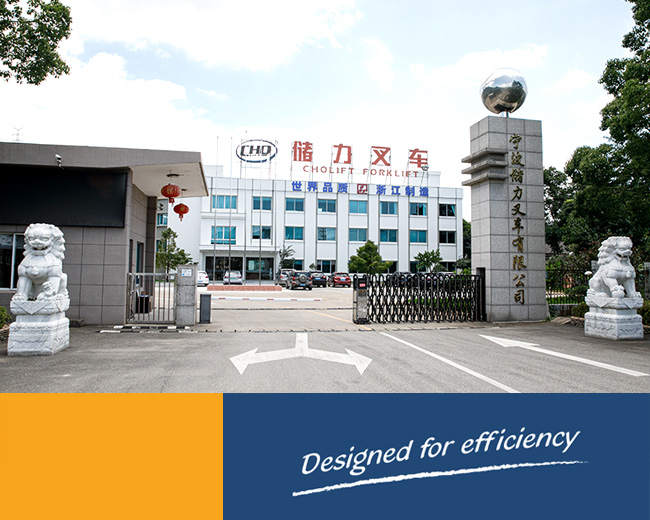
Who we are
WELCOME TO CHOLIFT!
NINGBO CHOLIFT FORKLIFT CO.LTD. is a famous China Electric Pallet Trucks Manufacturers and wholesale Full-Electric Pallet Trucks factory. At the same time, it is a professional manufacturer of large-scale production of storage material handling equipment and related industrial vehicles. Our company is located in Ninghai, which has a forest coverage rate of 62.5% and is known as a natural oxygen bar. With a factory area of 65,000 square meters, more than 300 employees, and fixed assets of more than 200 million yuan, we have strong comprehensive strength. "CHOLIFT Forklift" and "CHOLIFT" are the trademarks of the company's products, and we have passed and implemented the ISO9001 quality system standard. "Credit first" is the quality tenet, all products are strictly tested by ISO-related standards, and CE and GS certifications have been carried out by third-party certification companies.
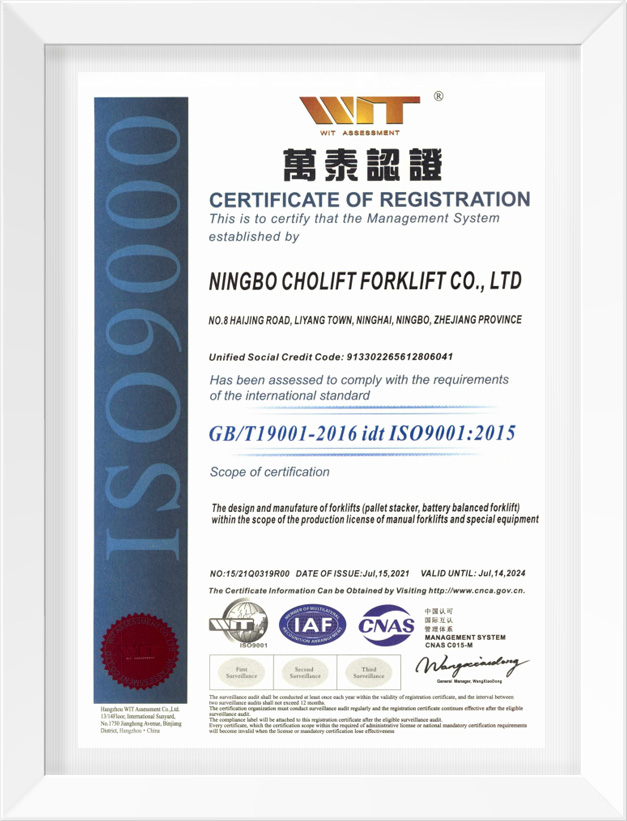
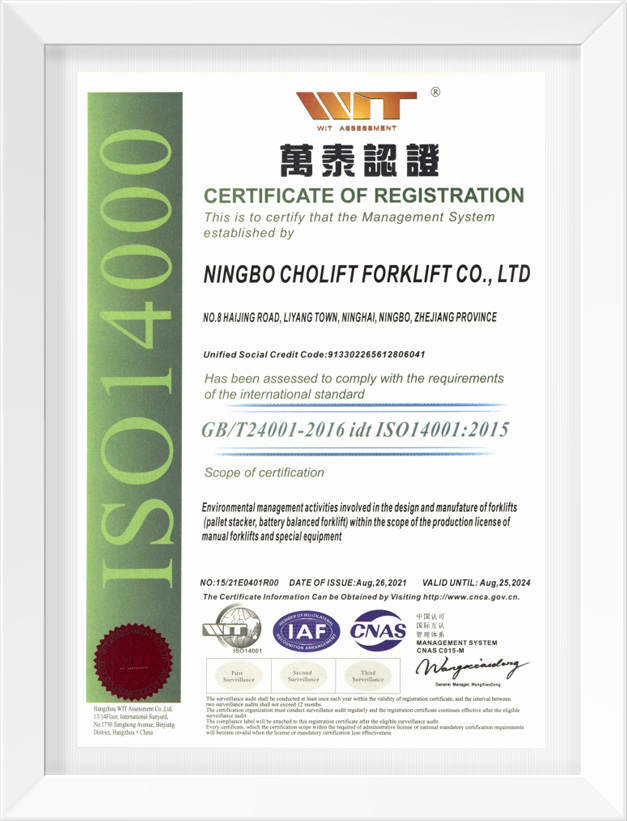
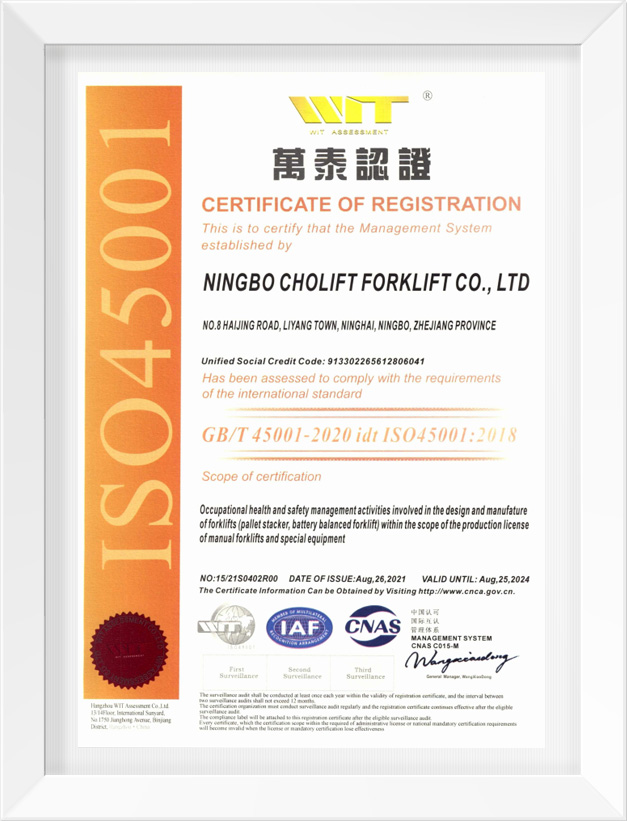
Our Certification
A technical team specializing in the design and manufacture of industrial vehicles supports the development of the enterprise, and we have a number of patents of the Self-developed products. We adhere to the concept of human-centred design, and adopt international advanced technical indicators, and pursue the purpose of leading technology throughout the process.
-
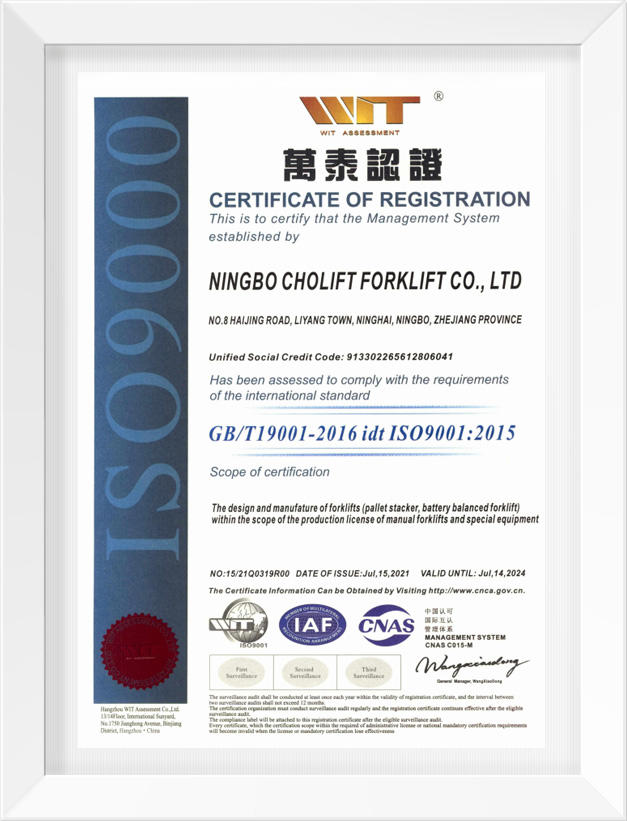
ISO9000
-
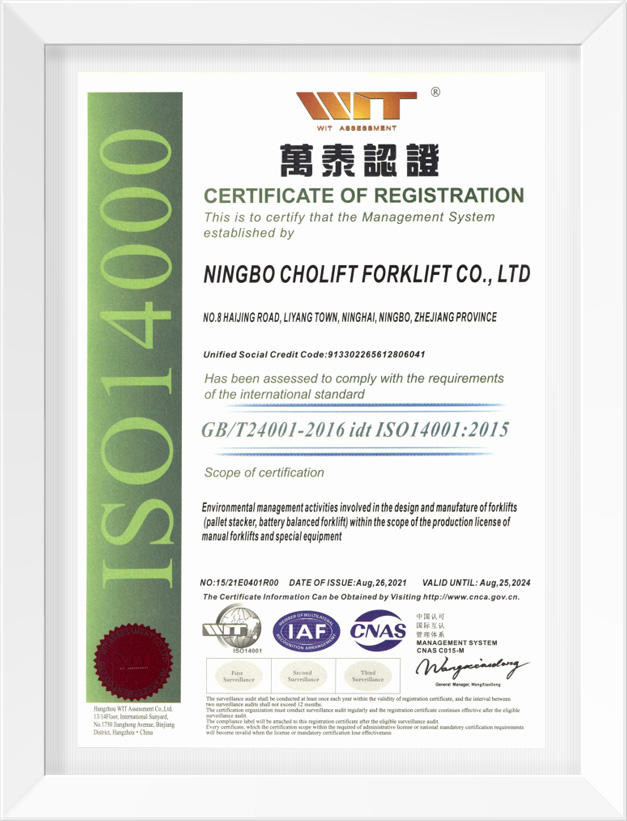
ISO14000
-
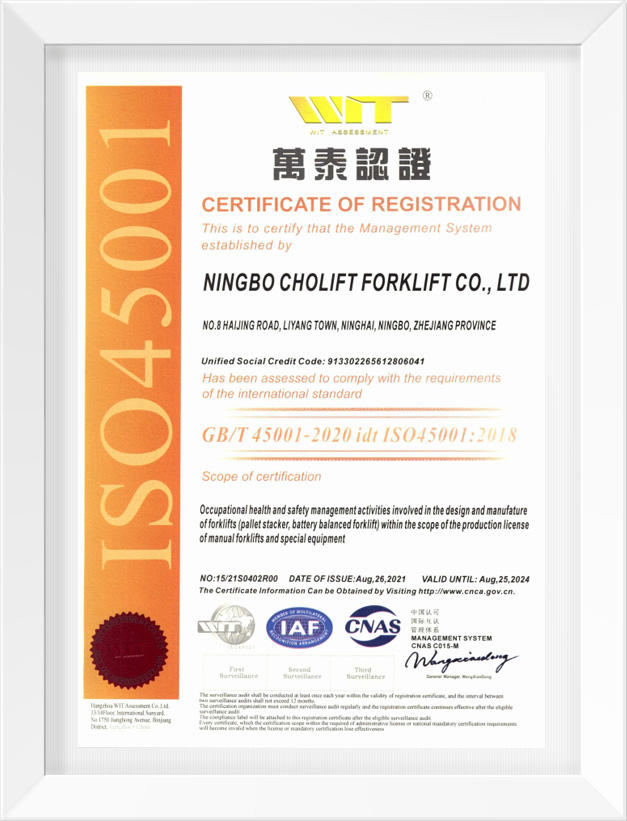
ISO45001
Related News
Industry knowledge extension of this category
What is Full-Electric Pallet Trucks
Full-electric pallet trucks, also known as electric pallet jacks or electric pallet stackers, are material handling equipment used in warehouses, distribution centers, and other industrial settings. They are designed to lift, transport, and stack palletized loads efficiently and with minimal effort.
Unlike traditional manual pallet jacks that require physical exertion from the operator, full-electric pallet trucks are powered by electric motors and equipped with rechargeable batteries. This eliminates the need for manual pumping or pushing, allowing operators to move heavy loads effortlessly.
Full-electric pallet trucks typically consist of a forked platform, a set of wheels, and a lifting mechanism. The forks slide under pallets, and the lifting mechanism raises the load to a desired height, allowing for easy transportation. The wheels, located at the front and rear of the truck, facilitate smooth movement across the warehouse floor.
These trucks offer several advantages over their manual counterparts. The electric-powered operation eliminates the physical strain on operators, reducing the risk of injuries and fatigue. It also enhances productivity by enabling faster and more efficient movement of goods within the facility.
Features and Advantages of Full-Electric Pallet Trucks
Full-electric pallet trucks incorporate cutting-edge technology to streamline operations. They are powered by high-capacity lithium-ion batteries that provide extended operating times, eliminating the need for frequent recharging. This ensures uninterrupted workflow and reduces downtime, ultimately boosting productivity.
Equipped with powerful electric motors, these trucks offer exceptional maneuverability and control. They feature precise steering systems that enable effortless navigation even in tight spaces. With adjustable speed settings, operators can adapt to various work environments, ensuring efficient handling of pallets and goods.
Safety is a paramount consideration in material handling. Full-electric pallet trucks are equipped with advanced safety features, such as built-in sensors, emergency stop buttons, and automatic braking systems. These features enhance operator safety and reduce the risk of accidents and injuries.
Furthermore, full-electric pallet trucks are ergonomically designed to minimize operator fatigue and strain. With adjustable handlebars, comfortable grips, and intuitive controls, these trucks promote a healthy and user-friendly work environment, leading to increased efficiency and job satisfaction.
Eagerly Anticipates the Market Tidal Current, Guiding The Consumption Concept.


Copyright © NINGBO CHOLIFT FORKLIFT CO.LTD. all rights reserved. Wholesale Full-Electric Pallet Trucks Factory